
 English
 中文简体
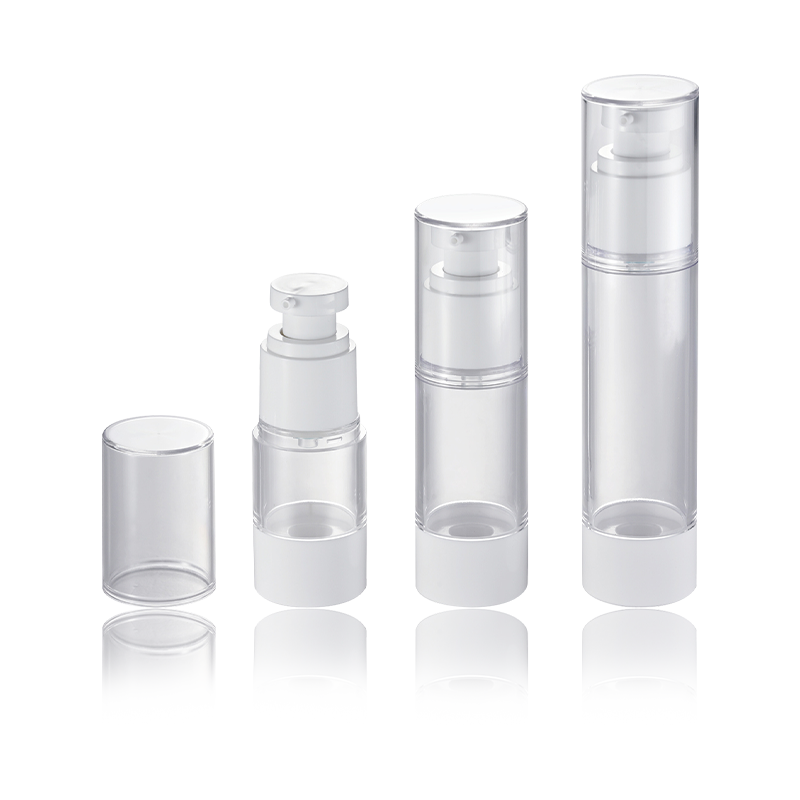
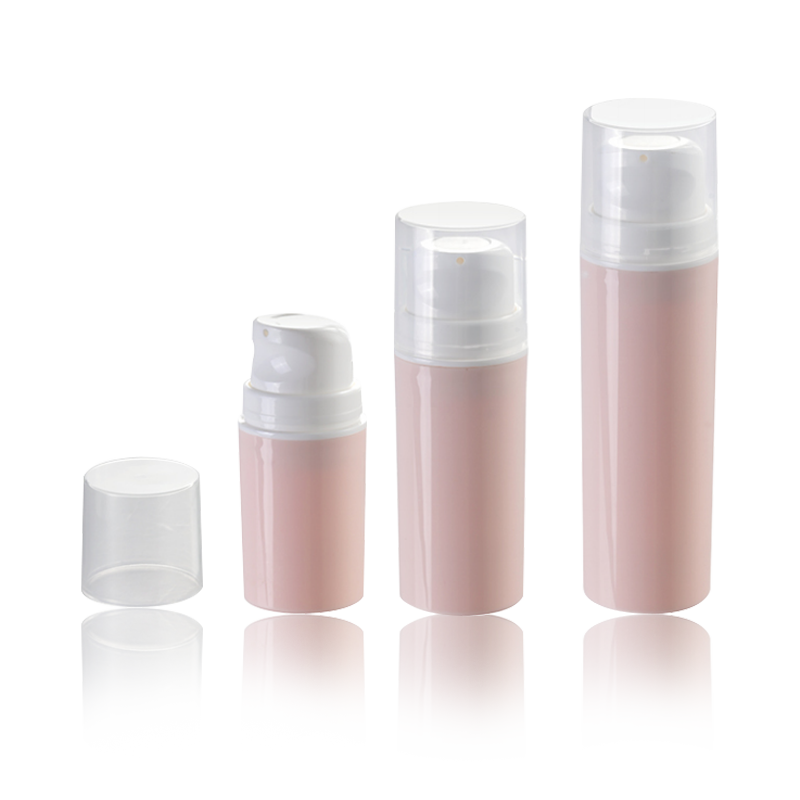
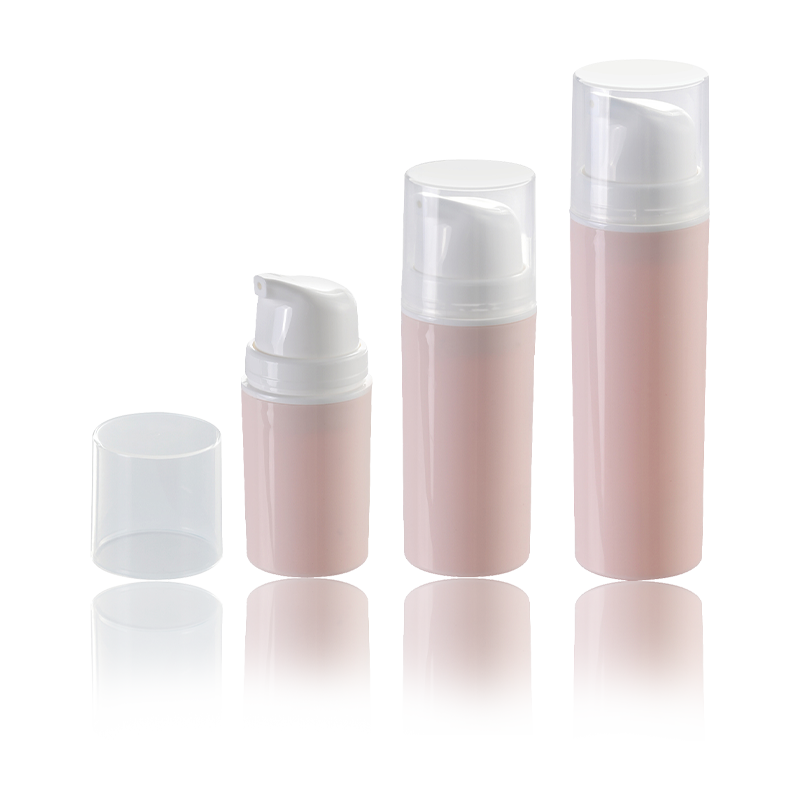
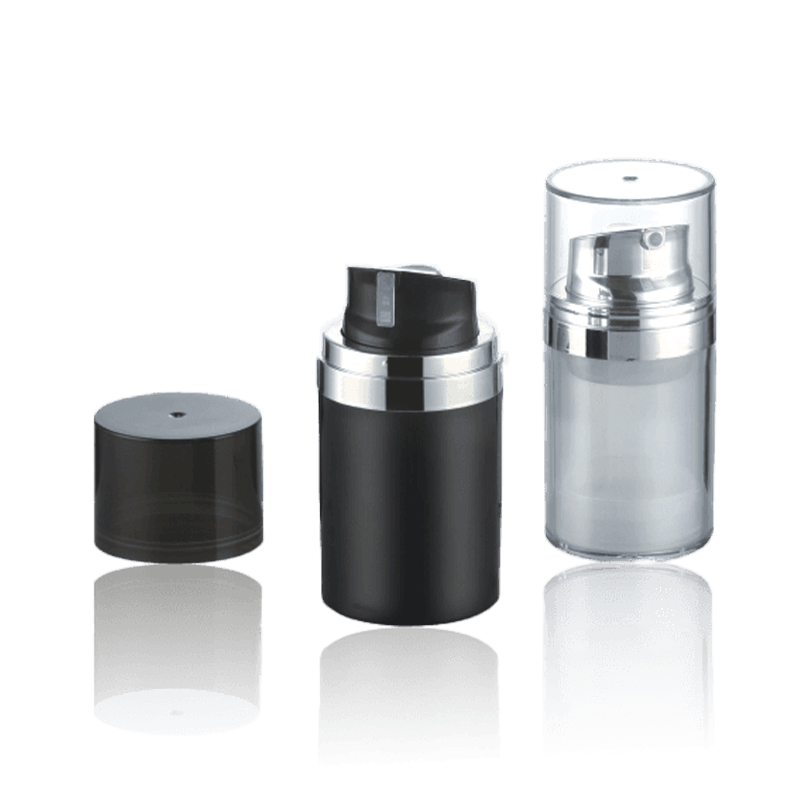
An airless bottle for lotion is a rigid pack that dispenses with a piston rising from the base instead of a dip tube, so the formula never meets air until it leaves the nozzle. Three outcomes follow directly: the emulsion stays stable down to the last stroke, the pump delivers the same dose at stroke one and stroke five hundred, and the pack can be filled without matching a tube length to the bottle height. What you pay for that is a higher unit cost and a filling line that has to be set up with a little more care.
This guide is written for the people who actually sign off on the pack: product developers choosing a container, buyers comparing quotes, and filling engineers who need to know where the tolerances sit before tooling is cut.
How an Airless Bottle for Lotion Actually Works
The dispensing force is mechanical, not chemical: the pump creates a partial vacuum, and atmospheric pressure pushes the piston up behind the lotion. Nothing else moves the product, which is why an airless pack needs no dip tube and no spring-loaded follower plate.
- Body — the rigid outer shell, usually PP; an inner liner or a clear outer with an opaque inner is optional.
- Piston — sits under the fill and rises as product leaves. This seal is the single part that decides whether the pack drips, tails off, or evacuates cleanly.
- Pump engine — the dosing chamber, available with a metal spring or in a metal-free version for oxidative formulas.
- Actuator and cap — the touch points the consumer judges; the cap also carries the tamper-evident story.
Because the base vents air only into the space behind the piston, the lotion itself sees no oxygen during use. That is the practical reason actives such as retinol, vitamin C derivatives and probiotic blends are usually specified in this format rather than in a standard lotion pump. If you want the pressure and dosing behaviour explained in more depth, this reference on how cosmetic airless bottles regulate pressure and dose is a useful starting point.
Airless vs a Standard Lotion Pump Bottle
Airless wins on protection and evacuation; a standard pump wins on unit cost and filling simplicity — and the right answer usually depends on how much the formula costs per litre. A conventional pump vents air back into the bottle after every stroke, so the headspace grows, the product oxidises gradually, and the dose drifts as the pack empties.
| Criteria | Airless bottle | Standard lotion pump bottle |
|---|---|---|
| Air contact during use | None; air enters only behind the piston | Vents air back on every return stroke |
| Evacuation rate | Typically 90–96% of fill | Typically 70–85% of fill |
| Dose consistency | Stable from first to last stroke | Drifts as headspace increases |
| Oxidative actives | Easier to protect; lower antioxidant loading | Needs a stronger protective system |
| Unit cost | Higher | Lower |
| Filling complexity | Requires deaeration and correct piston seating | More forgiving, faster line speeds |
| Typical fit | Premium skincare, actives, clinical brands | High-volume body lotion, value lines |
The arithmetic is simple: if the fill is worth several times the container, the extra cost of an airless pack is a rounding error against the cost of a formula that fades in the last third of its life. For a low-cost body lotion sold in large volumes, a standard pump is often the better commercial call.
Matching the Pump Engine to Lotion Viscosity
Specify the dose in millilitres per stroke first, then let the pump engine be chosen around the viscosity — not the other way round. A lotion is a fluid emulsion, and the same engine that feels crisp in a 5,000 mPa·s lotion can feel sluggish or drip in a 500 mPa·s one.
| Product type | Viscosity band | Suggested dose | Engine note |
|---|---|---|---|
| Fluid, toner-like lotion | under 1,000 mPa·s | 0.15–0.20 ml | Tight-tolerance engine to avoid nozzle drip |
| Light facial lotion | 1,000–5,000 mPa·s | 0.20–0.25 ml | Most common lotion specification |
| Standard body lotion | 5,000–20,000 mPa·s | 0.25–0.30 ml | Wider intake port for easier priming |
| Rich cream-lotion | above 20,000 mPa·s | 0.30–0.50 ml | Often needs a cream-pump variant |
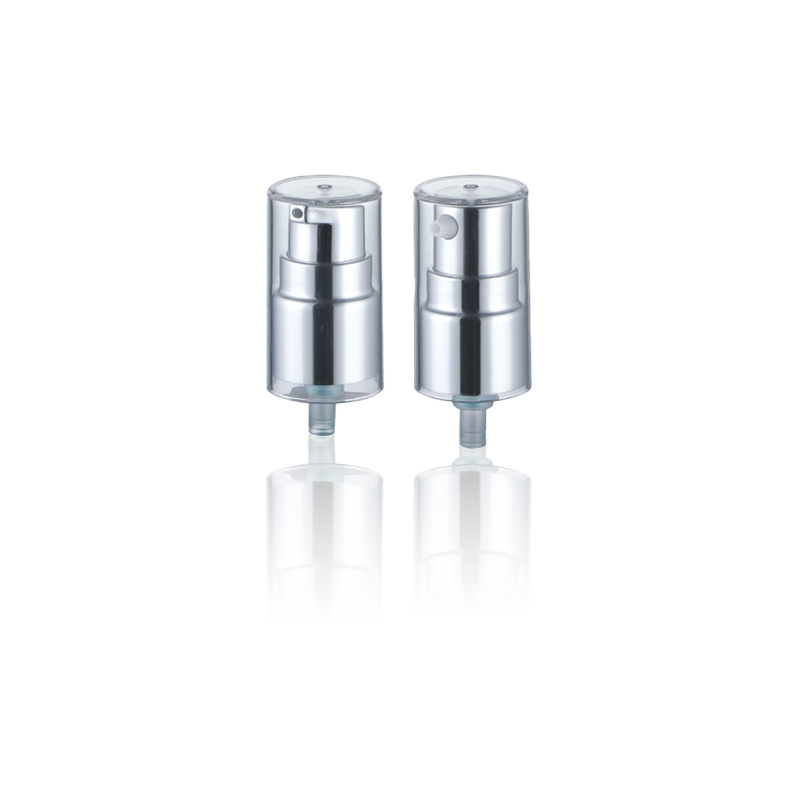 Liquid Distributor-HY18A-01Cosmetic Pump Dispenser Liquid Distributor-HY18A-01 is a precision pump head dispenser designed for mid-to-high-end skin care products, lotions and high-viscosity cosm...View Product →
Two practical notes. First, dose is measured by weight over ten strokes, not by volume, and it should be re-checked at the end of the pack as well as the start. Second, a lotion that contains volatile silicones or a high alcohol content will behave differently on a filling line than in a beaker, so always test with the production bulk, not a lab sample.
Sizing and Fill Volume: Where Quotes Quietly Diverge
Airless bottles are normally filled to roughly 90–95% of nominal capacity, because the piston needs room to seat and the fill has to be deaerated. That gap between "50 ml bottle" and "45 ml of lotion" is where supplier quotes stop being comparable.
| Nominal size | Typical fill | Approximate strokes | Usual application |
|---|---|---|---|
| 15 ml | 13–14 ml | 55–70 | Eye and spot treatments, sampling |
| 30 ml | 27–29 ml | 100–120 | Facial serum-lotion |
| 50 ml | 45–48 ml | 170–200 | Facial lotion, gift sets |
| 100 ml | 90–96 ml | 330–380 | Body lotion, travel retail |
| 120 ml | 108–115 ml | 400–450 | Family or professional sizes |
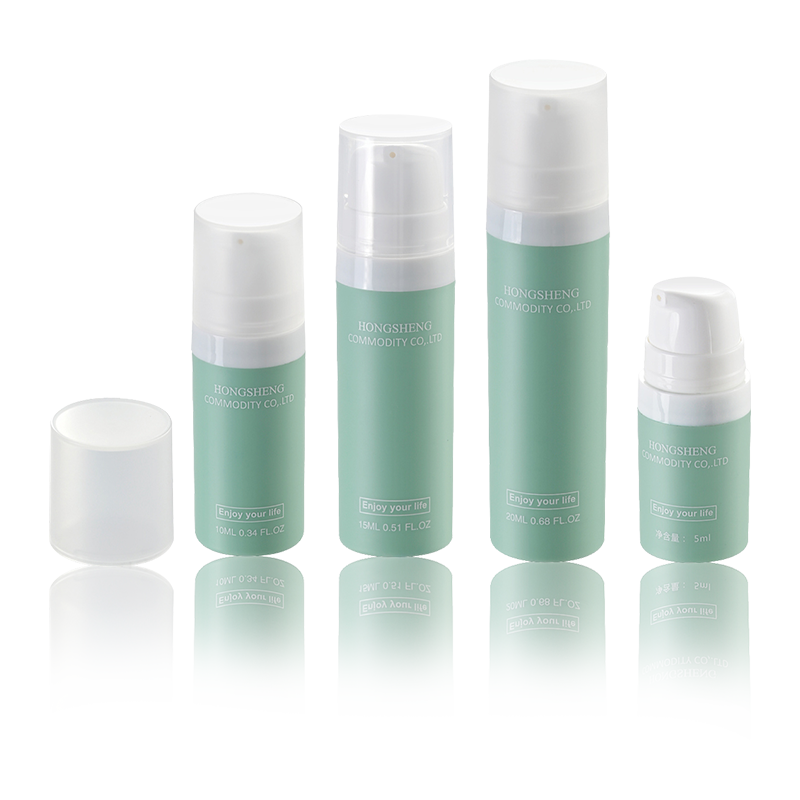
When comparing quotations, ask three questions: is the price quoted per bottle or per filled unit, is the fill weight or the nominal capacity the basis of the claim, and what overfill allowance is assumed. Our own vacuum bottle range runs from compact 15 ml formats up to larger body sizes, so most lotion briefs can be matched to an existing mould before any tooling spend is discussed.
Materials, Decoration and Component Fit
Material choice is mostly about the look you want and the chemistry you must resist, while fit is about buying bottle, pump and cap as one system rather than three. Standard bodies are PP; AS, PMMA and SAN give a heavy, glass-like wall for premium lines; PCR-PP is the usual route when a brand needs a recycled-content claim.
- Decoration — silk screen, hot stamp, spray coating and electroplating are the common options; coatings must be checked against the formula, because a solvent in the lotion can lift a finish at the shoulder.
- Closure fit — the cap thread, the actuator skirt and the bottle neck have to be toleranced together; mixing sources here is the most common cause of a loose or over-tight cap on the line.
- Refill and refillable claims — a screw-off pump makes refilling possible, but only if the piston can be reset reliably; test it before you print the claim.
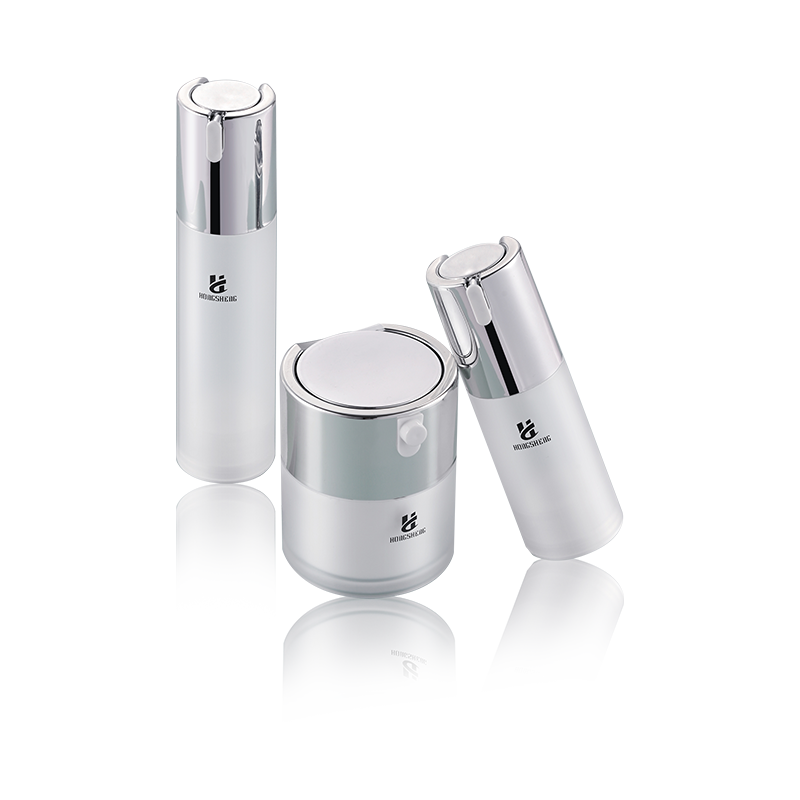 Set Series-TZXL-001In the skin care packaging industry, 30ML 50ML 30g Advanced Simple Skin Care Bottle Set Series-TZXL-001 is becoming the core solution for brands to cope with the marke...View Product →
Buying bottle, engine and cap as a matched set removes most of that risk. It also shortens sampling: one round of fit and compatibility testing instead of three parallel ones that still have to be reconciled.
A Procurement Checklist You Can Paste Into a PO
Write the acceptance criteria into the purchase order before tooling starts, because most airless disputes come from unstated tolerances rather than from visible defects. The checks below are the ones that catch problems early.
| Check | Method | Suggested acceptance |
|---|---|---|
| Dose weight | Weigh ten consecutive strokes, start and end of pack | Within ±5% of target; no downward drift at end of pack |
| Evacuation | Dispense until the pump stops | At least 90% of the declared fill recovered |
| Actuation force | Push-pull gauge, five samples | Roughly 15–35 N, consistent across the batch |
| Leakage | 24 hours inverted at 40 °C | No seepage at the pump-to-body joint |
| Drop resistance | 1.2 m onto a hard floor, filled | No cracking, no leakage, piston still seated |
| Compatibility | 4 weeks at 40 °C with the finished bulk | No stress cracking, no colour shift, no odour change |
- Confirm the dose in millilitres and the acceptable weight window.
- Agree the fill volume, the overfill allowance and the declared net content.
- Fix the colour reference under a stated light source, not from a phone photo.
- State the decoration durability test — alcohol rub, tape test or abrasion cycles.
- Ask for the piston material and whether it is compatible with silicone-heavy formulas.
Frequently Asked Questions
Is an airless bottle suitable for a thin, watery lotion?
Yes, provided the engine is chosen for it. Thin formulas need a tighter-tolerance engine and a smaller dose, typically 0.15–0.20 ml per stroke, otherwise the nozzle tends to drip between uses. Sample with the actual bulk rather than water.
Can an airless pack be refilled?
Some can, if the pump unscrews and the piston can be reset. Many decorative packs are not designed for it, and forcing a refill usually damages the piston seal. Decide the claim before you choose the structure.
How much lotion is left when the pump stops?
Usually 4–10% of the fill, depending on the engine and how the piston seats at the top of the body. A clean evacuation is a pump-and-piston design question, not a body question.
Does airless packaging remove the need for preservatives?
No. It reduces the microbial challenge during use, but the fill itself is not sterile, so the water phase still needs a preservation system. Many brands reduce the level rather than remove it.
What order quantities should I expect?
With an existing mould, orders are usually in the low thousands of units; a new mould adds tooling cost and several weeks of development before filling trials can begin. Ask early whether your size and dose combination already exists in the supplier's tooling library.
Choose the format on formula value, not on trend. If the lotion contains an active that degrades in air, or if the brand promise depends on a clean, controlled dose to the last stroke, an airless pack earns its cost within one product cycle. If neither applies, a standard pump will usually serve the price point better.
Yuyao Hongsheng Commodity Co., Ltd. has been moulding and decorating cosmetic packaging from its 7,000 m² plant in Yuyao, Zhejiang since 2014, working as an OEM supplier with in-house injection moulding, printing and electroplating. Its vacuum bottle tooling runs from the hs001a series through hs038, with matching pumps, dispensers and caps, so a lotion pack can be sourced and fit-tested as one system rather than assembled from unrelated parts. Most projects start with a sample, a drawing or a target dose — that is usually enough to shortlist a structure.