
 English
 中文简体
An airless bottle can absolutely be the right pack for a perfume, but only for certain fragrance formats. If your formula is alcohol-free, oil-based, balm-like, or noticeably thicker than a classic spray, an airless pack keeps oxygen away from the juice, slows evaporation, and delivers a measured dose on every press. If you are filling a 60–80% alcohol eau de toilette into a glass flacon, a conventional spray pump remains the cheaper and more familiar answer.
That line is worth settling before you order samples, because the two decisions that sink most perfume airless projects are taken at the brief stage: the wrong formula-to-pack match, and an actuator specified for the wrong texture. The notes below cover where the line sits, what belongs on a specification sheet, and which details to lock down with a factory before any tooling money is spent.
How an Airless Bottle Works with a Fragrance Formula
An airless bottle keeps the formula inside a sealed chamber and pushes it out with a piston, so the fragrance only meets air at the nozzle.
There is no dip tube inside the pack. The product sits between the pump base and a piston that rises from the bottom of the bottle as the pump is pressed. As liquid leaves the chamber, a slight vacuum forms behind the piston and it climbs smoothly, which is why the dose stays even from the first press to the last. Compare that with a standard dip tube bottle, where the pump pulls liquid up a tube, air pockets appear as the level drops, and the final millilitres are often unreachable.
For fragrance specifically, that behaviour translates into a short list of practical advantages:
- Oxidation is limited to the small amount of liquid sitting in the pump chamber, so top notes and citrus-heavy accords hold their character longer.
- Evaporation during storage and shelf life is reduced, which matters when the formula is expensive or built on volatile naturals.
- Evacuation is close to complete, so a 30 ml pack can honestly be sold as 30 ml of usable product.
- The pack is orientation-independent: it dispenses upside down without spitting, which suits travel retail and handbag sizes.
- Because there is no continuous air path, the preservative system can sometimes be simplified, although that call belongs to the formulator rather than the packaging supplier.
The trade-offs are equally real. An airless pack cannot be casually opened and re-closed by the consumer, filling has to run top-down against the piston, and unit cost is higher than a comparable dip tube bottle. If your perfume is meant to be sprayed as a fine mist over a wide area, an airless actuator is also the wrong tool: airless pumps deliver a bead or a short ribbon of product, not an aerosol-like cloud. For more background on how these packs are built, the site's own comprehensive knowledge of cosmetic airless bottles is a useful companion read.
Which Perfume Formats Suit an Airless Bottle
The short answer: alcohol-free and low-alcohol fragrances fit an airless bottle well, while high-alcohol sprays and wide-area mists do not.
Alcohol is the deciding variable. Ethanol at 60–80% is volatile, aggressive toward some polymers and elastomers, and it only performs the way consumers expect when it is atomised into a fine mist. Once alcohol drops below roughly a third of the formula, or disappears entirely, the pack no longer has to fight evaporation of the carrier, and the thicker liquid actually helps the piston travel evenly.
| Perfume format | Fit with an airless bottle | Main reason | Typical pack choice |
|---|---|---|---|
| Perfume oil or attar, alcohol-free | Strong fit | No volatile carrier to evaporate, and oil is gentler on wetted parts than ethanol | 10–30 ml, pump path checked for metal content |
| Concentrated EDP, alcohol under about 30% | Good fit | Modest alcohol load, thick enough for even piston travel | 30–50 ml with crimped pump |
| Cream, balm or solid perfume | Workable | Viscous formula, but a jar is simpler and cheaper to fill | 15–50 ml jar or wide-mouth airless |
| Classic EDT or EDP, 60–80% alcohol | Poor fit | Ethanol is volatile and needs a fine mist that airless actuators cannot produce | Standard glass sprayer |
| Body mist or hair mist | Poor fit | High volume, wide spray pattern, low unit value | Trigger or mist sprayer |
| Travel, tester and sample sizes | Strong fit | Leak resistance and metered dosing matter most on the move | 5–15 ml |
Materials and Components That Decide the Result
In practice, most perfume airless failures are material and actuator problems rather than bottle-shape problems.
The wetted parts to ask about are the pump body, stem, piston, and any internal spring. Most are moulded in PP or PE, and some designs place a metal spring inside the product path. For a fragrance, request a full wetted-material list plus a compatibility statement written against your specific formula, not a generic claim of being suitable for cosmetics.
Three checks are worth running before you commit to a mould:
- Compatibility soak: fill working samples with the final juice and hold them at 40 °C for four to eight weeks, then inspect for swelling, stress cracking, discolouration and odour change.
- Weight-loss test: record filled weight at day one and at the end of the soak to put a number on evaporation through the pack.
- Freeze-thaw cycling: three cycles between 4 °C and 40 °C, then re-check actuation force and leakage.
Choosing the outer shell is mostly a marketing and cost decision. PET and PETG give the clear, glass-like look that suits fragrance counters; PP is cheaper and accepts more decoration routes. If the formula carries a high share of citrus or terpene-rich oils, confirm that the outer material is not left under stress by the decoration process, because solvent-based lacquers and electroplating can attack stressed polymer. Whatever decoration you choose, silk screen, hot stamping, spray coating or electroplating should never be applied to surfaces that touch the formula.
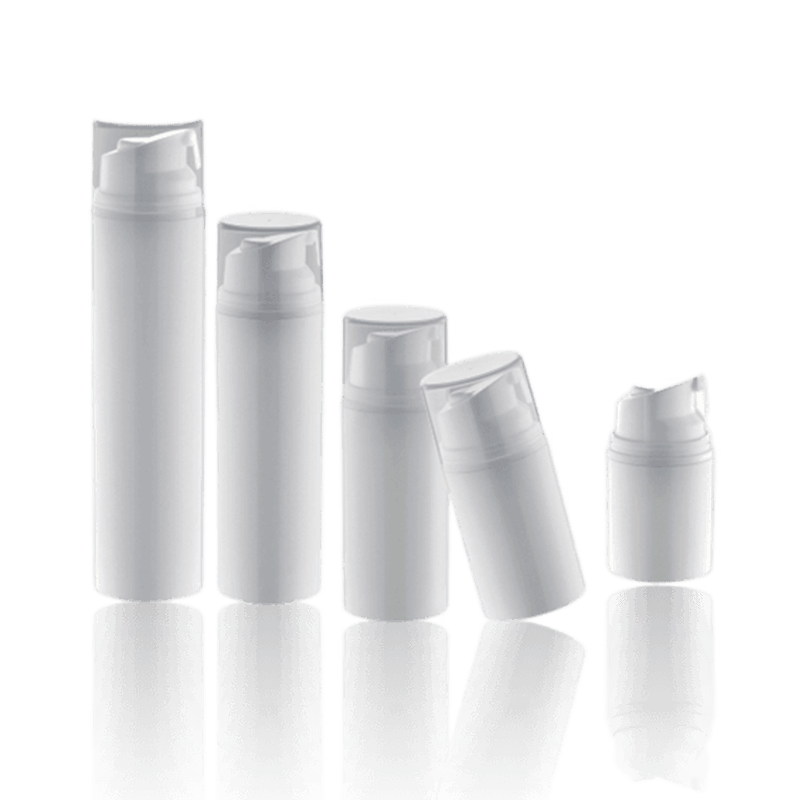
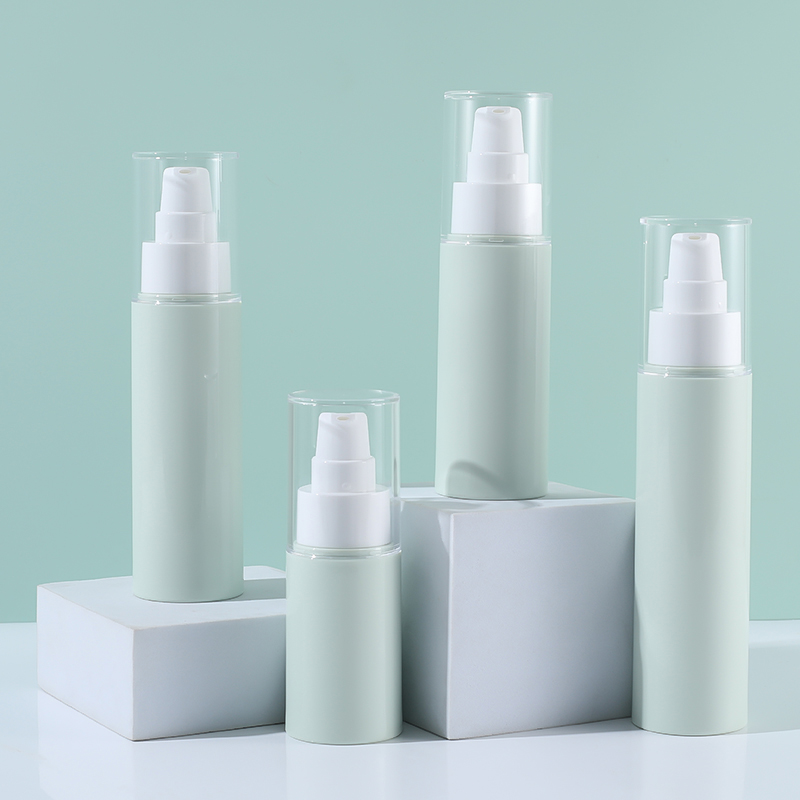 HS-017A Airless Cosmetic Pump Bottle for Skin CareAirless pump bottle in 50–120 ml with matte finish and screen-printing space, suited to skin care formulas needing oxidation protection.View Product →
Specifications Worth Writing into the Brief
A good brief fits on one page and answers nine questions; everything else is decoration.
| Parameter | Range to discuss | Why it matters |
|---|---|---|
| Nominal capacity | 10, 15, 30 or 50 ml | Sets the usable fill, the retail price point and the shelf presence |
| Usable fill volume | 85–90% of nominal capacity | Leaves room for piston travel and for expansion in warm storage |
| Dose per stroke | 0.15–0.35 ml | Defines how many presses a consumer gets and how the dose feels |
| Actuation force | A comfortable single-finger press | Too stiff reads as "broken" during in-store testing |
| Leak testing | 100% inline air or water test | Fragrance oils stain cartons and damage secondary packaging |
| Weight loss over 8 weeks | Limit agreed in writing with the supplier | Direct measure of evaporation through the assembled pack |
| Wetted materials | Full list, including any spring | Required input for the formula compatibility review |
| Decoration | Silk screen, hot stamp, spray, electroplate | Affects lead time, unit cost and end-of-life recyclability |
| Filling method | Bottom-up fill with the pump crimped or screwed after | Determines whether your existing filling line can run the pack |
Two numbers deserve extra attention. The dose per stroke drives the perceived value of the whole product: a 0.2 ml push on a 30 ml pack is roughly 130 to 140 uses, which is generous for a concentrated oil and thin for a body lotion. The second is actuation force, because a stiff piston is usually a filling or tolerance issue rather than a design one.
A perfume line rarely ships as a single pack. If a perfumed body lotion, hand cream or hair oil sits beside the fragrance in the same range, a matching lotion dispenser keeps the family look consistent without a second bottle mould.
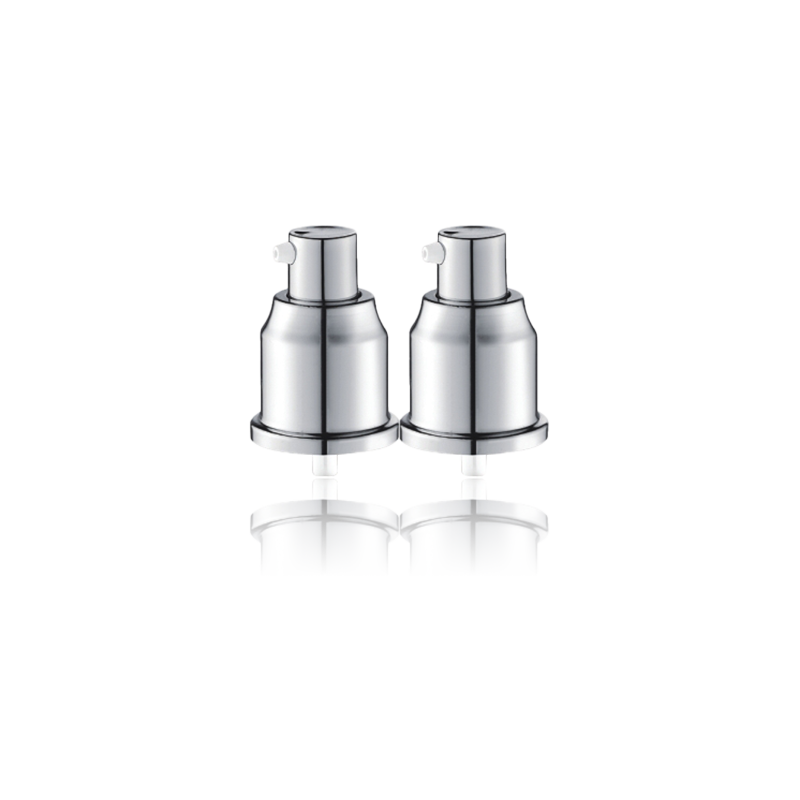
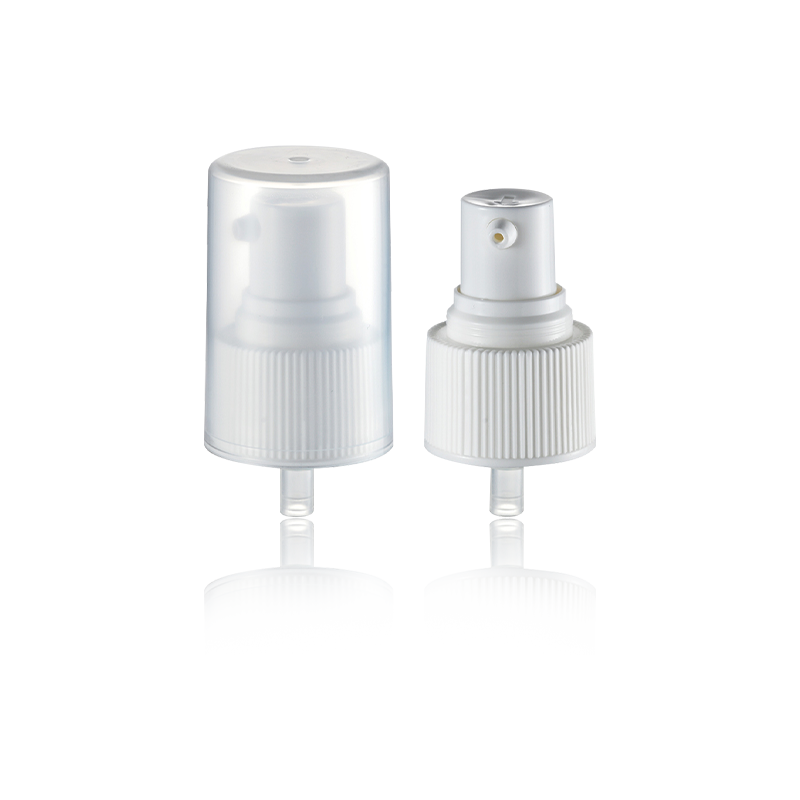 Silky Spring Cosmetic Pump Head HY24A-01 for LotionsPrecision press pump head with smooth rebound and sealing, suited to lotions, essences, and matching dispensers in mid-to-high-end skin care ranges.View Product →
Sampling and OEM Production: Agree These Points Before Tooling
Sign off the fill method, the actuator and the decoration before any mould is cut, because each one changes either the tooling or the assembly line.
When you approach a supplier, send the formula details with the brief: alcohol percentage, oil content, viscosity and any ingredient that is known to attack plastics. Ask for working samples filled with your own juice rather than with water or plain ethanol, and expect to see three stages: an undecorated functional sample, a decorated sample matching the artwork, and a short pilot run for leak and dose statistics. If a supplier will only quote from a catalogue photo, the compatibility risk stays with you.
Commercial terms matter just as much as the mould. Decoration usually carries its own setup cost per colour and per artwork change, so a two-colour silk screen plus a sprayed shell can add more to the unit price than the bottle itself. Minimum order quantities are normally set per model and per colour, which is why a limited edition in three shades can be more expensive than a single large run. A factory that handles design, injection moulding, printing and electroplating on one site shortens the loop between sample rounds, which is the main reason to involve a custom cosmetic packaging factory early rather than as a last step.
Gift and travel formats bring one more variable: the pack has to look deliberate inside a box or a pouch. Assembled sets that pair a bottle with a jar or a pump reduce handling at the fill site and keep component tolerances consistent.
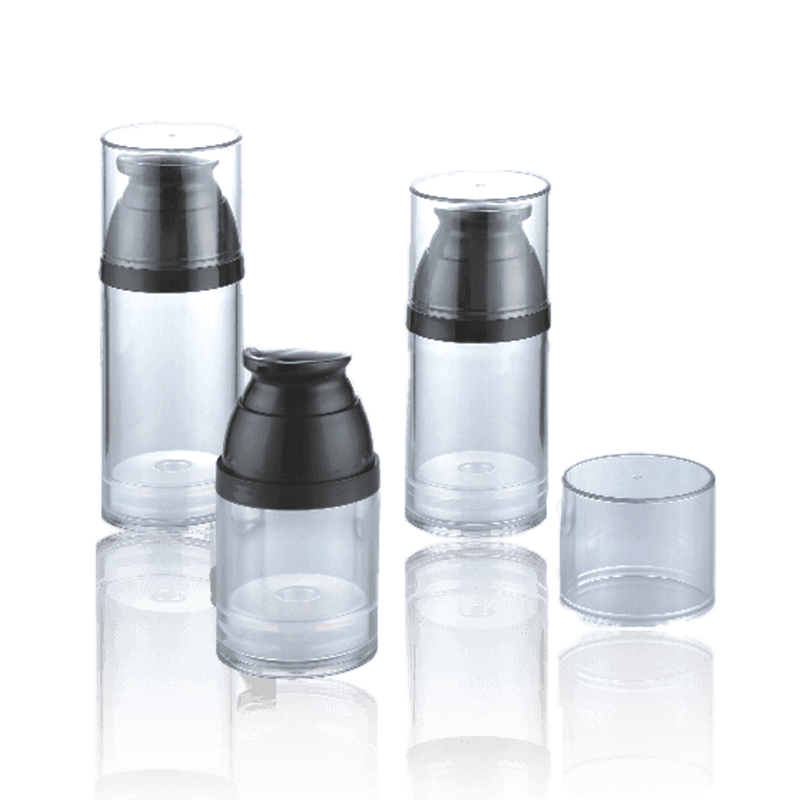
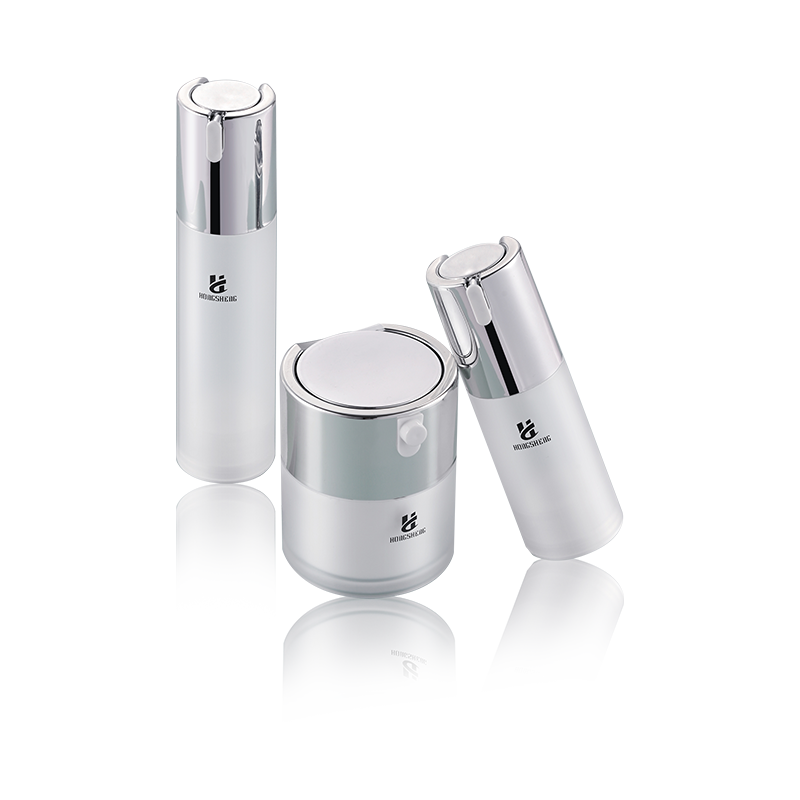 TZXL-001 Modular Skin Care Bottle and Jar SetVacuum-preservation set in 30 ml, 50 ml, and 30 g formats with precise pump, suited to travel, trial, and multi-step skin care routines.View Product →
Common Pitfalls at the Sampling Stage
Most perfume airless projects that fail do so for one of six repeated reasons, and all six are avoidable on paper.
- Approving a sample that was filled with water or plain ethanol instead of the real formula, so swelling and odour transfer only appear after launch.
- Locking the bottle before the alcohol percentage is frozen, which means a formula change can invalidate the pack choice.
- Ignoring the overcap: a loose or rattling cap reads as poor quality even when the pump is perfect.
- Filling without seating the piston at the bottom first, which traps air and makes the pack stall half-empty.
- Specifying electroplating or heavy lacquer on parts that contact the juice, or on stressed polymer that later crazes.
- Ordering decoration before the leak and dose data are in, so a functional fix forces a decoration change with it.
One assumption is worth retiring: airless does not automatically mean preservative-free. It limits oxygen exposure, but water-based emulsions still need a preservation strategy, and that judgement belongs to the formulator.
Frequently Asked Questions
Is an airless bottle good for perfume?
Yes for alcohol-free, oil-based or low-alcohol fragrances, where it limits oxidation, cuts evaporation and gives a metered dose. No for a classic 60–80% alcohol eau de toilette, which needs a fine mist from a conventional sprayer.
Can an airless bottle handle alcohol-based perfume?
Up to a point. Formulas below roughly 30% ethanol are usually workable, but the wetted materials and the actuator have to be checked against that specific formula. High-alcohol sprays are better served by a standard spray pump.
What size airless bottle suits a 30 ml perfume?
A 30 ml nominal bottle is the usual match, filled to about 85–90% of capacity so the piston has room to travel. Use 15 ml for travel and testers, and 50 ml for body oils or lotions sold in the same line.
Why did my airless bottle stop dispensing halfway through?
Almost always because air entered the chamber. That happens when the pack is filled incorrectly against the piston, or when the pump is primed dry. Once air sits behind the piston, the vacuum cannot build and the pack stalls.
Can a perfume airless bottle be refilled?
Usually not by the consumer, and it is rarely worth designing for. The pump is crimped or press-fitted, so opening the pack breaks the seal. Refillable outer-shell formats exist, but the mechanism has to be agreed before tooling.