
 English
 中文简体
中文简体Airless bottle production is not simply about molding a plastic bottle; it is about engineering a precise system of moving parts that keeps a cosmetic formula stable from the first pump to the last. The most common production failures — leaking pumps, collapsing pistons, inconsistent dosing — are almost always traceable to decisions made during material selection and mold design, not at the assembly line. This guide breaks down what actually happens during airless bottle manufacturing, the quality checkpoints that determine whether a bottle will perform in the market, and the practical criteria you should use when evaluating an OEM supplier.
What Airless Bottle Production Actually Involves
An airless bottle is a three-component system — bottle body, moving piston, and pump head — and production quality is determined by how precisely these parts fit and move together.
During manufacturing, the piston is inserted into the bottle body before filling, and the pump head is then sealed onto the bottle. When the user presses the pump, a spring or elastic mechanism drives the piston upward, which pushes the formula through a one-way valve. The design is fundamentally different from conventional bottle production because the piston and pump mechanism create a vacuum that moves product; there is no dip tube and no drawn-in air.
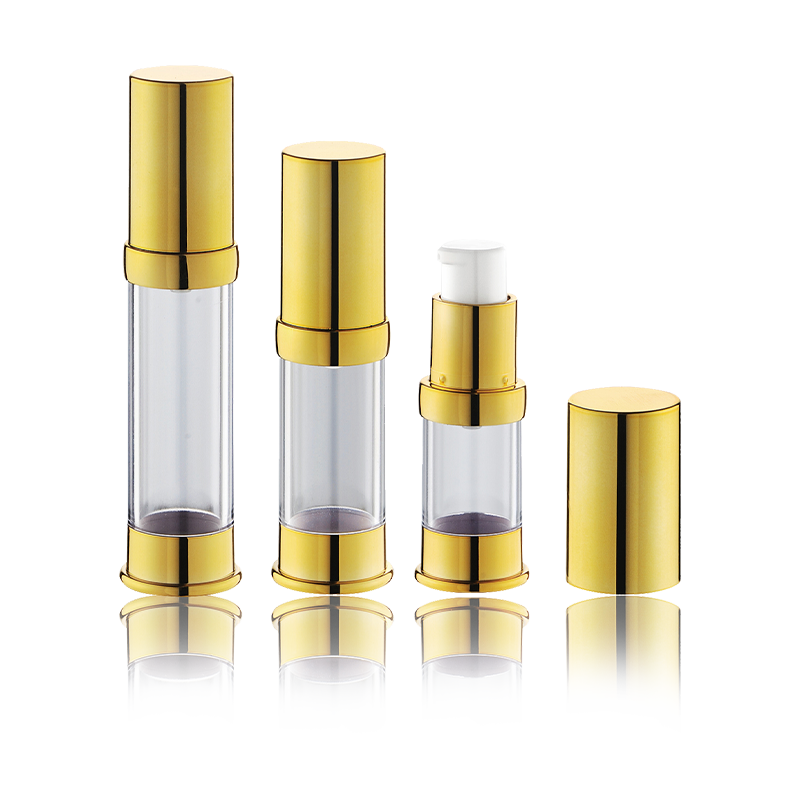 Airless Vacuum Bottle HS-001A with Various CapacitiesThis vacuum bottle series offers capacities from 5ml to 15ml with a 20mm diameter. It is essential for understanding piston tolerance and production precision.View Product →
Understanding this mechanism is essential for production planning, and our guide to cosmetic airless bottle knowledge covers the technology in more detail. The most critical tolerance is the piston-to-body fit; if the clearance is too tight, the piston sticks or the bottle scratches internally, and if it is too loose, air enters and the formula oxidizes. Small variations in the internal diameter of the bottle body, the piston diameter, or the valve sealing geometry can lead to leakage, air ingress, or pumping resistance. A good production setup will monitor these dimensions with optical sorting or automated gauging, and the molding process must be stable enough to hold consistent wall thickness across the entire bottle body.
Materials and Their Impact on Production Quality
Material choice is the first decision that determines whether your formula will survive its shelf life in an airless container, and it is also the factor that most directly affects cost, weight, and recyclability.
The most common materials used in airless bottle production are PP, PETG, and PMMA, each with distinct trade-offs. PP offers good chemical resistance and is the mainstream choice for many skincare formulas, but it is more difficult to achieve a high-gloss appearance. PETG provides excellent clarity and is often used for premium serums and lotions, but it is less resistant to strong solvents and requires more care in the filling process. PMMA, meanwhile, delivers a glass-like transparent finish but can be brittle and has a higher cost.
| Material | Clarity | Chemical Resistance | Cost | Best Suited For |
|---|---|---|---|---|
| PP | Low to medium | High | Low | Lotions, cleansers, sunscreen |
| PETG | High | Medium | Medium | Serums, creams, oil-based formulas |
| PMMA | Very high | Medium | High | Premium skincare, transparent packaging |
The table above is a simplification, but it explains why a supplier needs to ask about your formula before recommending a material. An airless bottle that works well with a 30% oil-phase serum may fail with a low-viscosity toner that contains high alcohol content. Production testing should always include compatibility testing with the actual formula, at both the intended storage temperature and under temperature cycling.
Key Production Steps and Quality Control Points
Injection molding precision and assembly tolerances are what separate a functional airless bottle from a leaking, sticking, or failed dispenser.
The production sequence normally starts with the molding of the bottle body, the piston, the pump head, and the collar. After molding, each part is inspected and then assembled. In practical terms, the most critical control points are:
- Piston-to-bottle fit tolerance, which should be controlled within 0.1 mm or less to prevent air leakage while allowing the piston to move smoothly.
- Pump spring force and valve cracking pressure, which determine the dosing accuracy and pump return speed.
- Sealing geometry of the collar and pump head, where under- or over-tightening can cause leakage or stripping.
- Wall-thickness uniformity of the bottle body, which is especially important for PP bottles because inconsistent thickness creates visible lines and may affect piston travel.
Beyond these mechanical checks, factories should also conduct fill-and-pump testing on sample bottles before mass production. This means filling a representative batch with water or a placeholder formula, pumping it through the bottle cycle, and checking the output volume per stroke, the pump return force, and whether any formula remains in the bottom reservoir at the end of the cycle.
Choosing the Right Production Partner: What to Verify
When evaluating an airless bottle supplier, you should verify six specific production capabilities before placing a bulk order, and you should do this with the same rigor that applies to formula development.
The first item on the checklist is whether the factory has its own injection molding equipment and in-house assembly-inspection lines, because outsourcing the molding to a subcontractor increases the risk of inconsistent dimensions. Second, ask for a cleanroom or dust-controlled assembly area; airless bottles can develop pumping difficulties if dust or mold residue enters the pump mechanism. Third, confirm the factory can perform automated or semi-automated QC checks and provide a QC report with each batch. Tests should include leak testing, pump cycle durability, and piston travel verification.
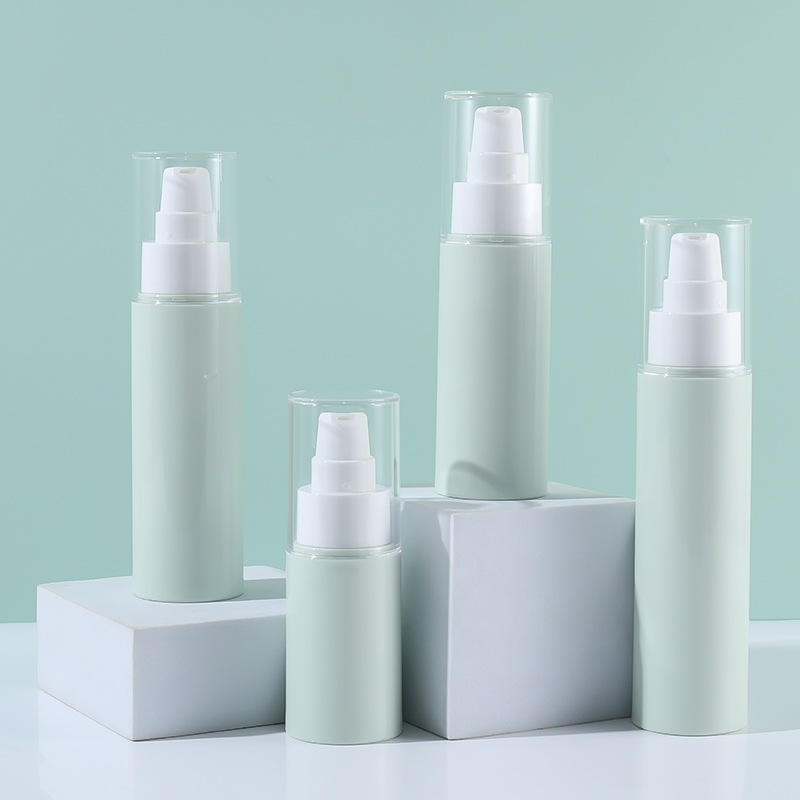 Airless Bottle HS-017A with Matte Finish and Multiple SizesAvailable in 50ml to 120ml with a 41.5mm diameter, this airless bottle features a white body and brown matte cap. Its design supports in-house QC and customization needs.View Product →
Fourth, consider the supplier's ability to customize. Airless bottles are often specified by their capacity, neck finish, and pump configuration. A factory that offers multiple piston sizes, springs, and valve options within one product platform can save you substantial mold investment. Fifth, examine the material supply chain. Reputable suppliers will declare whether they use virgin, recycled, or food-grade resins, and they can trace the resin lot to the final product if a quality issue occurs. Sixth, and perhaps most importantly, review the factory's track record with your intended market.
Which Products Work Well in Airless — and Which Don't
Airless technology suits low-to-medium viscosity skincare formulas best, while high-viscosity creams, powders, or alcohol-based solutions need extra compatibility checks.
The table below summarizes the practical compatibility of common cosmetic product types with airless bottles. However, the true test is always run on the actual formula at the intended fill volume — even a formula that meets the general rules can fail if the bottle is overfilled or the product settles into a thick layer at the bottom.
| Product Type | Typical Viscosity | Airless Compatibility | Production Considerations |
|---|---|---|---|
| Serum | Low | High | Requires precise valve sealing; avoid alcohol-heavy formulas with PP. |
| Lotion | Medium | High | Works well across most materials; verify piston travel over time. |
| Facial cream | High | Medium | Requires a larger piston opening; monitor for product clogging. |
| Sunscreen | Medium to high | Medium to high | Compatibility depends on UV filters; some filters interact with PP. |
| Powder-based cleanser | N/A | Low | Not recommended in standard airless bottles without specialized valve design. |
From a procurement risk standpoint, the most common issue is overfilling. If the bottle is filled past the piston position, the extra formula compresses the air gap, preventing the piston from moving upward properly. The result is a first pump that spits, followed by a weak flow. This can be avoided by specifying the exact fill volume in the production order and by testing the bottle with the actual fill level before bulk production.
 Vacuum Bottle HS-037A in Wide Capacity RangeThis vacuum bottle provides capacities from 30ml to 150ml with a 49mm diameter. It is suitable for addressing fill volume issues and testing before bulk production.View Product →
FAQ
Here are the answers to the most common questions from brands evaluating airless bottle production.
What is the minimum order quantity for custom airless bottles?
MOQ varies by material and size. For standard PP airless bottles, MOQs commonly start at 5,000–10,000 units, while custom molds can require higher quantities. PETG and PMMA bottles tend to have higher MOQs due to longer production cycles. Your supplier should split MOQ into mold development and production MOQ to give you a clear picture.
How long does airless bottle production take?
A typical production timeline is 25–35 days after sample approval. Most of this time is consumed by mold development and pilot trial, followed by mass production and QC. Because airless bottles involve multiple components, you should also budget for assembly and filling line coordination.
Can the same airless bottle be used for both serum and cream?
Rarely. The pump head and piston geometry are optimized for a specific viscosity range. A serum with low viscosity will not dose accurately in a cream-oriented pump, and a cream may clog a serum pump. Product development and packaging selection should be done together.
Are airless bottles recyclable?
Most PP and PETG airless bottles are technically recyclable if the piston and pump can be removed or separated, and many suppliers now offer mono-material designs. However, some pump mechanisms contain a metal spring, which can complicate recycling; full-plastic airless bottles offer a meaningful improvement in recyclability. For export to the EU or North America, you should also ask the supplier for REACH or FDA material statements.
What should I provide to a supplier for a custom airless bottle project?
Start with your formula, fill volume, target dimensions, preferred shape, and compatibility requirements. Providing a sample of your current packaging or a competitor product helps the supplier understand the pump action and dosing you expect. It also reduces the risk of production changes after tooling starts.