
 English
 中文简体
中文简体PP plastic is generally the better choice for the internal pump mechanism of an airless bottle because of its chemical resistance and flexibility, while AS plastic is usually the better choice for the outer bottle body when a clear, glass-like finish is required. Most airless bottles on the market actually combine both materials in a single unit, using each one where its properties matter most.
This article breaks down the technical differences between AS resin and PP resin, compares their performance in cosmetic packaging, and explains which material fits which part of an airless bottle system.
What Is AS Plastic?
AS plastic, also called SAN (Styrene Acrylonitrile), is a copolymer made by combining styrene and acrylonitrile monomers. The styrene component gives the material transparency and rigidity, while the acrylonitrile component adds chemical and heat resistance compared to plain polystyrene.
Key Characteristics of AS Plastic
- High transparency, close to acrylic and glass in visual clarity
- Moderate hardness with a brittle fracture behavior under sharp impact
- Good resistance to oils and moderate heat compared to standard polystyrene
- Considered safe for direct contact with cosmetic and food products when produced to cosmetic-grade standards
- Commonly used for compact cases, lipstick tube components, jar lids, and clear outer bottle shells
What Is PP Plastic?
PP plastic (polypropylene) is a polyolefin thermoplastic and one of the most widely used resins in cosmetic packaging. It is the lightest common plastic used in this industry, with a density around 0.90 to 0.91 g/cm³, meaning a given weight of raw material produces more finished parts than heavier resins.
Key Characteristics of PP Plastic
- Very low density, reducing material and shipping costs
- High chemical resistance to acids, alkalis, and most cosmetic ingredients
- Low moisture absorption, which helps protect water-sensitive formulas
- Flexible and impact-resistant rather than brittle
- Naturally translucent to opaque rather than fully clear
- Lower melting point, which can be a limitation in high-heat environments
AS vs PP: Side-by-Side Property Comparison
The table below compares the two materials across the properties that matter most when selecting packaging for an airless bottle.
| Property | AS Plastic | PP Plastic |
|---|---|---|
| Density | 1.07–1.08 g/cm³ | 0.90–0.91 g/cm³ |
| Transparency | High, glass-like | Translucent to opaque |
| Impact Behavior | Rigid, can crack under sharp impact | Flexible, resists cracking |
| Chemical Resistance | Good against oils, moderate overall | Excellent against acids, alkalis, most cosmetic bases |
| Heat Resistance | Moderate to good | Lower melting point, deforms under heat |
| Moisture Absorption | Low to moderate | Very low |
| Typical Role in Airless Bottles | Outer bottle body, jar lids, compact housings | Piston, pump actuator, dip tube, closures |
| Relative Material Cost | Higher | Lower |
| Recyclability | Limited recycling infrastructure | Widely recyclable (resin code 5) |
Why Airless Bottles Often Use Both Materials
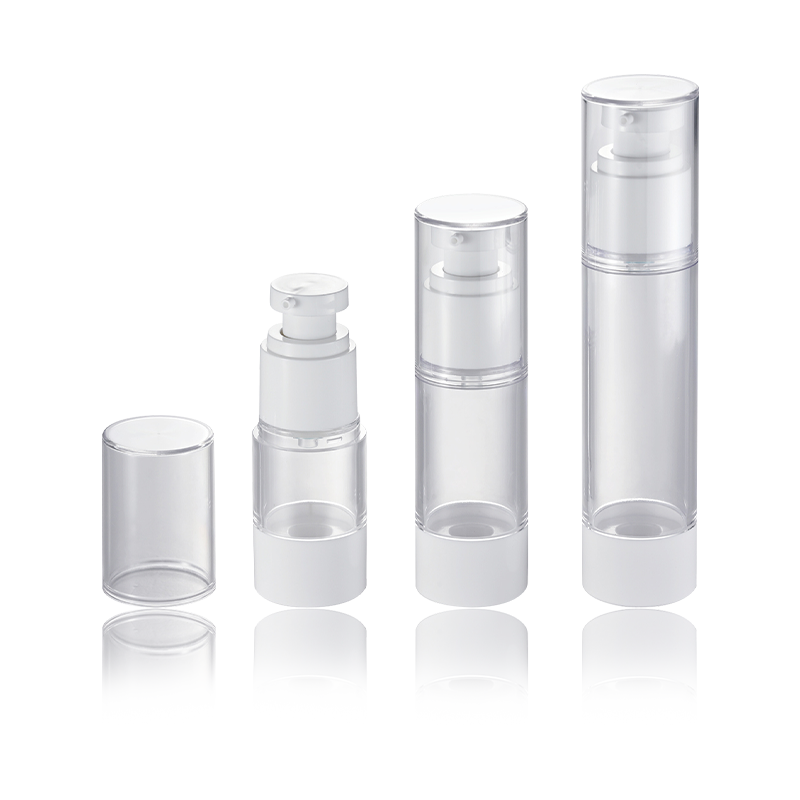
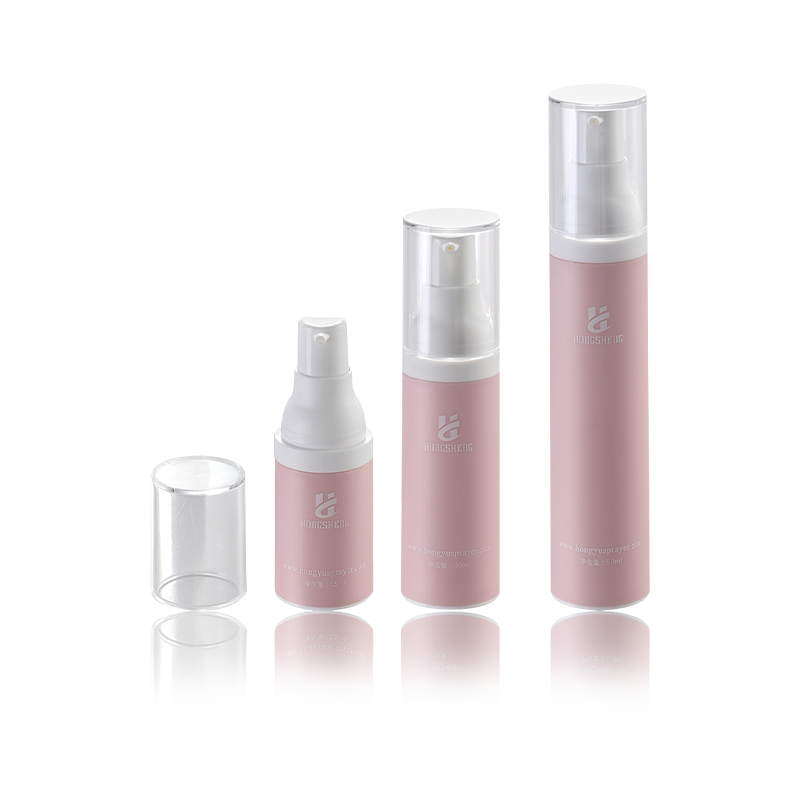
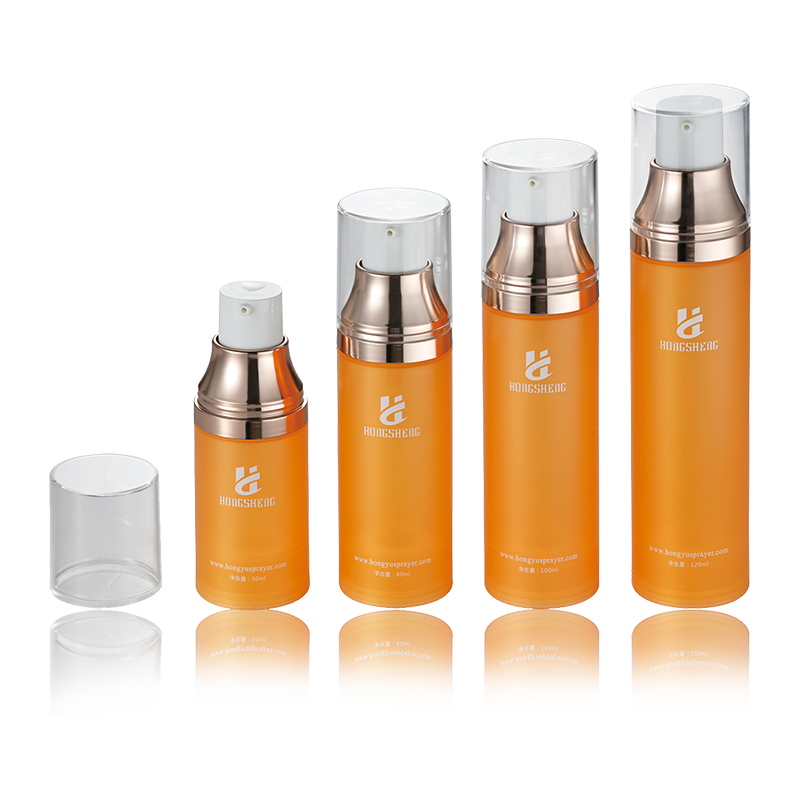
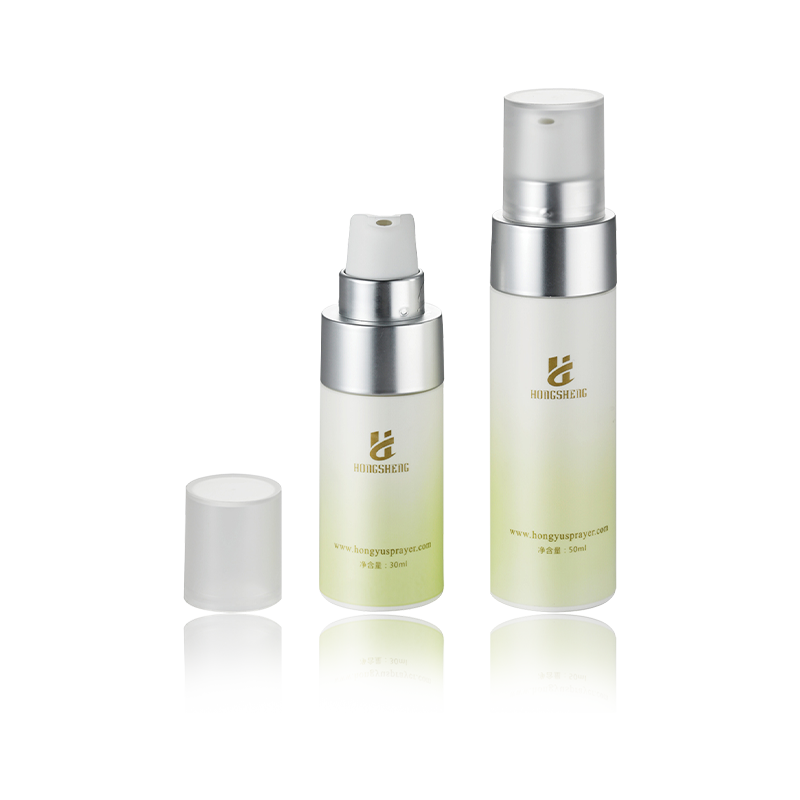
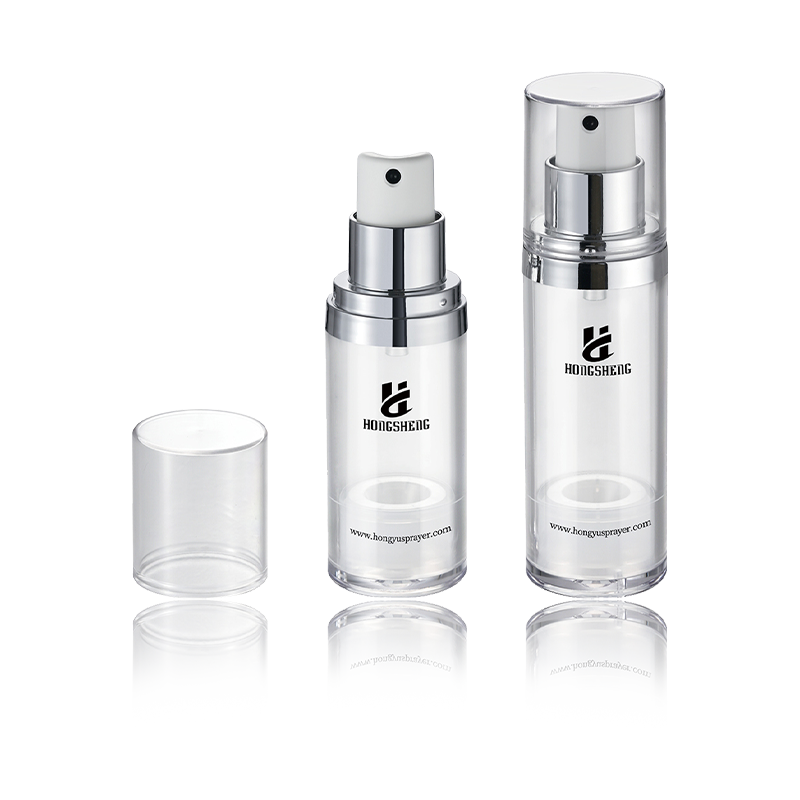
An airless bottle is not a single part; it is a system made of an outer shell, an inner pouch or piston mechanism, a pump head, and a dip tube or riser. Each component has a different job, which is why manufacturers rarely rely on one plastic for the whole unit.
Where AS Plastic Performs Best
The outer body of a premium airless bottle benefits from AS plastic when the goal is a clear or semi-clear finish that lets the piston travel be visible, or when the brand wants a glass-like shelf presence without the weight and breakage risk of actual glass.
Where PP Plastic Performs Best
The internal piston, pump actuator, and dip tube are almost always PP plastic because these parts are in constant contact with the formula and must resist chemical attack from surfactants, acids, and actives without becoming brittle over thousands of press cycles.
Choosing Between AS and PP for Specific Products
The right material depends on what the packaging needs to do, not just what it needs to look like. The list below outlines common product scenarios and the material that typically fits best.
- Serums with active ingredients (vitamin C, retinol, AHA/BHA): PP plastic is preferred for any part touching the formula because of its resistance to acidic and reactive compounds.
- Premium creams sold on visual shelf appeal: AS plastic works well for the outer housing to create a glass-like look at a lower weight and cost than real glass.
- Travel-size or budget-tier packaging: PP plastic across the whole unit lowers material cost and reduces breakage risk during shipping.
- Products requiring a transparent fill-level view: AS plastic or a combination of AS outer shell with PP internals allows users to see how much product remains.
- High-humidity or hot-climate distribution: PP plastic's low moisture absorption gives it an advantage in maintaining formula stability during transport and storage.
Cost and Supply Chain Considerations
PP resin is generally less expensive than AS resin because it is produced at larger global scale and does not require the copolymerization process that AS/SAN needs. Industry material coverage has noted that PP use in cosmetic packaging has been expanding at a double-digit annual rate in recent years, largely credited to its cost advantage and chemical stability compared to alternative resins, according to figures reported in Plastics Industry Journal trade coverage from 2023.
For brands ordering large volumes, choosing PP plastic for as many components as the design allows can meaningfully reduce per-unit packaging cost, while reserving AS plastic for the visible outer shell keeps the premium look where it matters most to the end consumer.
Sustainability: Which Material Recycles Better?
PP plastic has a clear advantage in recyclability. It carries resin identification code 5 and is accepted in a growing number of municipal and industrial recycling programs. AS plastic, by contrast, is processed through more limited recycling channels, which makes it harder for brands to claim full recyclability when AS is used for major bottle components.
Brands building sustainability claims into their packaging story should weigh this difference carefully: a bottle built primarily from PP plastic is easier to position as recyclable than one where the main body is AS plastic.
Common Mistakes When Choosing Between AS and PP
- Selecting AS plastic for parts that will have direct, repeated contact with active or acidic formulas, leading to premature cracking or clouding.
- Choosing PP plastic for a bottle body when full transparency is a required design feature, since standard PP will not achieve glass-like clarity.
- Ignoring shipping conditions: brittle AS components can crack under rough handling or cold-chain transport, while PP tolerates impact better.
- Overlooking recyclability requirements set by retail partners or regional packaging regulations before finalizing the material mix.
Frequently Asked Questions
Can AS plastic and PP plastic be used in the same airless bottle?
Yes. This is the most common configuration: an AS plastic outer shell paired with PP plastic internal pump components, combining visual clarity with chemical durability.
Is AS plastic safe for direct contact with cosmetic formulas?
Cosmetic-grade AS resin is considered safe for direct product contact. However, PP plastic is still the more common choice for parts exposed to acidic or reactive ingredients due to its stronger chemical resistance.
Which material is more affected by temperature during shipping?
PP plastic has a lower melting point and can soften or deform under sustained high heat, while AS plastic holds its shape better in moderate heat but is more prone to cracking in cold, high-impact conditions.
Does the choice between AS and PP affect product shelf life?
Shelf life in an airless system is primarily determined by the seal quality of the piston and pump mechanism, not the outer shell material. That said, PP's chemical resistance helps internal components maintain a reliable seal over more press cycles.
Which material costs less overall?
PP plastic is generally less expensive than AS plastic due to lower raw material cost and simpler processing, making it the more economical choice for high-volume production.
Conclusion
Neither AS plastic nor PP plastic is universally better for airless bottles; each solves a different problem. AS plastic delivers the transparency and premium appearance that shelf-facing components need, while PP plastic delivers the chemical resistance, flexibility, and lower cost that internal pump mechanisms require. The most reliable approach is to match the material to the function of each component rather than choosing one resin for the entire bottle.