
 English
 中文简体
中文简体The benefits of airless bottle packaging center on product protection, shelf-life extension, precise dispensing, and the elimination of preservatives from sensitive formulations. Airless bottles use a vacuum-driven piston mechanism rather than a dip tube to dispense the contents, which means the product never comes into contact with air during storage or use. According to market research from Grand View Research, the global airless packaging market was valued at over $5.5 billion in 2023 and is projected to grow at a compound annual rate of approximately 8%, driven by the booming clean beauty and natural skincare sectors. Understanding the full range of benefits of airless bottle packaging explains why luxury cosmetics, high-potency serums, organic creams, and pharmaceutical ointments have largely abandoned traditional open-mouth jars and dip-tube bottles in favor of this sealed, precision-dispensing technology.
How Airless Bottle Packaging Works and What Makes It Different
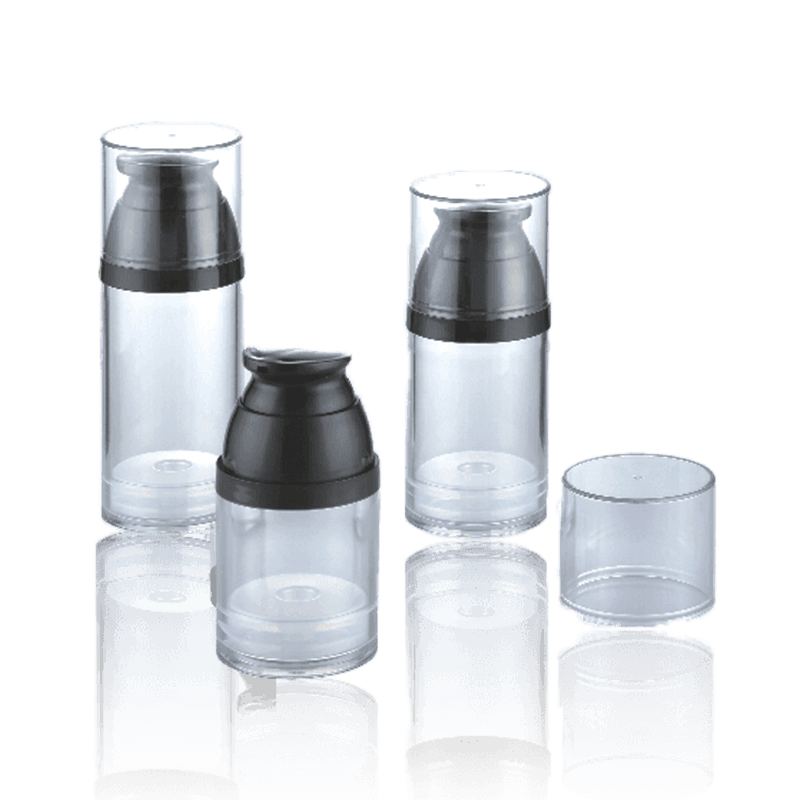
An airless bottle replaces the conventional dip tube with a sealed piston at the base of the container; when the pump is pressed, the piston rises as product is dispensed, and no air enters the container to fill the evacuated space. In a standard lotion bottle, a plastic dip tube extends from the pump down into the product, and as lotion is pumped out, air rushes in through the pump mechanism to equalize the pressure. This incoming air carries oxygen, airborne bacteria, mold spores, and ambient moisture into the bottle with every use. Over weeks and months, this repeated exposure oxidizes sensitive active ingredients, provides a medium for microbial growth, and gradually degrades the product's color, fragrance, and efficacy. An airless bottle completely blocks this contamination pathway. The product is sealed inside a collapsible inner bag or sits above a moving piston that is pushed upward by a spring or by the vacuum created when product is dispensed. According to packaging engineers at the University of Applied Sciences in Munich, airless systems can reduce oxygen ingress by over 99% compared to dip-tube bottles, effectively stopping oxidative degradation for the life of the product. This fundamental engineering difference is the source of all the major benefits of airless bottle packaging.
Extended Product Shelf Life and Active Ingredient Stability
The most commercially valuable benefit of airless bottle packaging is the dramatic extension of product shelf life, achieved by eliminating the oxygen and moisture that drive the degradation of active ingredients such as retinol, vitamin C, peptides, and plant extracts. Vitamin C, or ascorbic acid, is one of the most widely used antioxidants in skincare, but it is also notoriously unstable in the presence of oxygen and light. In a conventional jar, an L-ascorbic acid serum can lose 30% to 50% of its potency within 30 days of opening, as documented by a study published in the Journal of Cosmetic Dermatology. In an airless dispenser, the same formulation retains over 90% of its activity after 12 months because the airtight piston mechanism prevents oxygen from contacting the product. This stability extends beyond vitamins to include probiotics, live cultures in microbiome-friendly skincare, and oxidation-prone natural oils such as rosehip and argan. The economic implication for brands is significant: products with a longer usable life generate fewer returns, maintain better customer reviews, and can be formulated with fewer stabilizers and antioxidants that exist solely to protect the formula from itself. For consumers, the benefits of airless bottle packaging translate to a product that performs as well on the last pump as it did on the first.
Reduction or Elimination of Preservatives in Clean Formulations
Airless packaging enables cosmetic chemists to reduce the concentration of preservatives such as parabens, phenoxyethanol, and formaldehyde-releasing compounds, or to eliminate them entirely, because the product is never exposed to the airborne bacteria and fungi that preservatives are intended to control. Preservatives are necessary in traditional packaging to prevent microbial growth once the container is opened and the product is repeatedly touched by fingers or contaminated by airborne spores. However, consumer demand for preservative-free and "clean" formulations has grown rapidly, with a survey by the Consumer Healthcare Products Association indicating that over 60% of skincare buyers actively seek products labeled as paraben-free or preservative-free. An airless bottle physically isolates the product from contamination, which means that a properly manufactured cream or serum can remain microbiologically safe throughout its use without any added antimicrobial chemicals. This capability is particularly important for products marketed to sensitive skin types, where preservatives are a common source of contact dermatitis and allergic reactions. The preservative-free claim is one of the most powerful marketing benefits of airless bottle packaging, and it aligns directly with the rapid growth of the natural and organic cosmetics segment.
Precise, Controlled Dosing and Consumer Convenience
Airless pump mechanisms dispense a consistent, metered dose with each actuation, typically ranging from 0.15 to 0.30 milliliters per pump, which eliminates both over-application and product waste while giving the consumer precise control over how much product they use. This repeatable dosing is particularly valuable for high-potency prescription treatments such as retinoic acid creams and topical steroids, where applying too much can cause skin irritation and too little may be ineffective. The 360-degree dispensing capability of many airless bottles—they can be operated upside-down or at any angle—is another practical advantage over dip-tube bottles, which fail when the tube is not submerged in the product. For viscous products such as silicone-based primers, thick hair masks, and ointments, the vacuum assist of the piston mechanism makes dispensing far easier than shaking and squeezing a conventional tube. From an ergonomic standpoint, airless pumps often require less hand strength to operate than traditional lotion pumps, which is a meaningful benefit for elderly consumers and those with arthritis or reduced grip strength.
Near-Zero Product Waste and Superior Evacuation Efficiency
Airless bottle packaging achieves an evacuation rate of over 95%, compared to approximately 60% to 75% for a typical dip-tube lotion bottle, meaning that consumers can use almost every drop of the product they paid for without cutting open the container. The piston or collapsible inner bag of an airless bottle pushes the product continuously toward the pump, leaving only a thin film of residue on the inner walls. In a standard bottle, a significant amount of product—often 15% to 25% of the total fill weight—remains trapped below the dip tube, stuck to the sides, or inaccessible when the bottle is nearly empty. This residual product represents a direct financial loss to the consumer and a sustainability problem, as the wasted product adds to the environmental burden of the packaging itself. The high evacuation efficiency of airless packaging also benefits brands by reducing the overfill that is required to ensure the consumer receives the labeled net weight; when less overfill is needed, the total material and shipping weight of each unit is reduced. According to a life-cycle analysis published by the Sustainable Packaging Coalition, the benefits of airless bottle packaging include a measurable reduction in product waste that partially offsets the higher initial cost of the airless dispensing system.
Comparing Airless and Traditional Packaging: Key Performance Indicators
The table below provides a direct comparison of the performance characteristics that differentiate airless bottle packaging from conventional dip-tube bottles and open-mouth jars, showing why airless technology has become the preferred choice for premium formulations.
| Performance Metric | Airless Bottle Packaging | Traditional Dip-Tube Bottle | Open-Mouth Jar |
|---|---|---|---|
| Product Contact with Air | None during dispensing | Air enters after each pump | Full surface exposed during each use |
| Product Evacuation Rate | 95%–98% | 60%–75% | 70%–85% (with finger scooping) |
| Preservative Requirement | Minimal or none | Standard preservative system | Robust preservative system required |
| Dosing Control | Metered dose (0.15–0.30 ml/pump) | Variable; user-dependent | Completely manual; high waste potential |
| Dispensing Orientation | 360 degrees; any angle | Upright only | Any orientation (but spills) |
| Barrier to Microbial Contamination | Excellent; sealed system | Moderate; air intake path | Poor; direct finger contact |
Sustainability and Material Efficiency of Airless Packaging Systems
The sustainability benefits of airless bottle packaging extend beyond product waste reduction to include material efficiency, longer use cycles, and increasing adoption of recyclable mono-material designs that replace the mixed-material constructions of earlier generations. Early airless bottles were criticized by environmental advocates because they combined multiple types of plastic and metal springs in a single assembly, making them difficult or impossible to recycle. The current generation of airless packaging has largely addressed this concern. Mono-material airless bottles, in which the bottle body, piston, and pump mechanism are all made from polypropylene or all from polyethylene, can be recycled in standard plastic recycling streams without disassembly. According to the European Organization for Packaging and the Environment, the shift to mono-material designs has increased the recyclability rate of airless cosmetic packaging from approximately 10% to over 70% in the past five years. Furthermore, the high evacuation rate means that the package is completely emptied before disposal, reducing the contamination of recycling streams with residual product. Some manufacturers have introduced refillable airless bottles in which the inner cartridge is replaced while the outer shell and pump mechanism are reused, further reducing the plastic footprint per unit of product dispensed over the life of the packaging. While an airless bottle generally contains more plastic by weight than a simple jar, its ability to protect sensitive formulations without chemical preservatives and to ensure complete product use creates a net sustainability benefit when the entire product life cycle is analyzed.
Frequently Asked Questions About Airless Bottle Packaging
Does airless bottle packaging really prevent all bacteria from entering the product?
While no packaging is a perfect barrier, a properly designed airless bottle prevents airborne bacteria and fungi from entering the product chamber during normal use. The product is dispensed through a one-way valve, and no air or contaminants are drawn back into the container. However, the product itself must be manufactured under hygienic conditions and be free of contamination before filling, because the airless package does not sterilize an already-contaminated product.
Can thick creams and ointments be dispensed from an airless bottle?
Yes, but the pump and piston must be engineered for the specific viscosity of the product. High-viscosity formulations require a more powerful spring mechanism and a larger pump orifice. Most commercial airless bottles can handle products up to approximately 50,000 centipoise, which covers most cosmetic creams, hair masks, and pharmaceutical ointments. Very thick pastes, such as zinc oxide diaper creams, may require a specially designed high-viscosity airless pump.
Are the benefits of airless bottle packaging worth the higher cost?
For formulations containing expensive, oxidation-sensitive active ingredients, the benefits of airless bottle packaging more than justify the additional cost. The prevention of active ingredient degradation, the reduction in preservative use, and the near-complete product evacuation collectively deliver value that exceeds the price premium of the packaging. For simple, stable formulations such as basic body lotions, the additional cost may not be justified unless the brand is marketing a preservative-free or clean-beauty claim.
How do I prime an airless pump that is not dispensing?
An airless bottle pump sometimes needs to be primed before first use because the piston mechanism contains air from the manufacturing process. To prime the pump, hold the bottle upright, cover the nozzle with a tissue, and press the pump head fully down 10 to 20 times rapidly until product appears at the nozzle tip. Do not use a pin or sharp object to clear the nozzle, as this can damage the one-way valve.
The benefits of airless bottle packaging represent a fundamental improvement in the way sensitive liquid and semi-solid products are stored, dispensed, and protected. By replacing the air-return pathway of a conventional pump with a sealed piston or collapsible bag, airless technology extends shelf life, preserves active ingredients, reduces the need for chemical preservatives, provides precise dosing, and virtually eliminates product waste. These advantages have made airless packaging the standard for premium skincare, natural cosmetics, and high-value pharmaceutical formulations, and ongoing improvements in mono-material recyclability and refillable design are extending these benefits into a more sustainable future for the packaging industry.