
 English
 中文简体
中文简体A child resistant airless bottle merges a vacuum-driven dispensing system with a certified child-resistant closure, giving skincare, CBD, and OTC brands a packaging format that protects both the formula and the end user. This is not a niche specification; it is a legal requirement in many regulated categories and an expectation among retailers and consumers. The sections below explain how child resistant airless systems work, which standards govern them, and what to verify before committing to a supplier.
What Is a Child Resistant Airless Bottle?
A child resistant airless bottle is a two-part packaging system in which an airless pump draws product upward through a vacuum without introducing oxygen, while the child-resistant closure requires a deliberate two-step action to open. The airless mechanism extends shelf life and reduces preservative loading, but it does not provide child safety by itself. The closure is the component that makes the package child resistant.
The most common CR mechanisms used on airless bottles are push-and-turn, squeeze-and-turn, and locking flip-top designs. Each demands a combination of cognition, strength, and coordination that children under age five rarely possess. For a deeper technical background, refer to this comprehensive guide to cosmetic airless bottles.
For packaging buyers, the conclusion is simple: if your formula is hazardous, the airless bottle alone is not enough. The closure must be certified to the standards of your target market.
How Child Resistant Closures Work
All child resistant closures share the same design logic: they require two coordinated motions that a child under five cannot consistently perform, such as pressing down while turning, or squeezing while turning.
- Push-and-turn (press-and-turn): the user presses the cap downward and rotates it to a specific alignment point before removal. This is the most widely used CR system for cosmetic airless bottles.
- Squeeze-and-turn: the user squeezes two flexible sides of the cap while rotating. It is compact but requires more manual force, which can be challenging for elderly users.
- Locking flip-top: the cap has a separate locking ring or tab that must be slid or pressed before the spout can be flipped open. Common for lotion pumps and high-viscosity formulas.
Each mechanism presents a trade-off between child resistance, adult convenience, and compatibility with the airless pump stroke. The table below compares the three systems side by side.
| Mechanism | Opening Action | Best For | Adult Ease | Typical Use |
|---|---|---|---|---|
| Push-and-turn | Press down + rotate | Serums, creams, lotions | Moderate | Skincare, OTC topicals |
| Squeeze-and-turn | Squeeze sides + rotate | Small bottles, droppers | Lower | Essential oils, tinctures |
| Locking flip-top | Slide lock + flip open | Pumps, body care | Higher | CBD, emulsions |
When evaluating closures, request the supplier's adult openability data, not just child resistance results. A cap adults find difficult to open creates frustration; a cap that fails the adult protocol cannot be certified.
Safety Standards and Compliance
The legal basis for child resistant packaging is a set of standardized test protocols, primarily ISO 8317 and the U.S. Consumer Product Safety Commission regulation 16 CFR 1700, both of which use panels of children and adults to verify that a closure blocks child access while remaining openable by adults.
| Standard | Region | Scope | Key Test Criterion |
|---|---|---|---|
| ISO 8317 | International | Child-resistant packaging for pharmaceutical and hazardous products | At least 80% of children aged 42-51 months cannot open within 5 minutes; at least 90% within 10 minutes |
| 16 CFR 1700 | United States | Household substances, prescription and OTC drugs | At least 80% of children cannot open within 5 minutes; separate 5-minute test with 85% criterion |
| EN ISO 8317 | European Union | Pharmaceuticals and dangerous substances | Same protocol as ISO 8317 |
| CGSB 43.151 | Canada | Consumer chemical products | Requirements aligned with 16 CFR 1700 |
Certification is not a one-time event. The closure must be tested in its actual production configuration, with the same bottle, same pump, and same assembly torque, because any change in geometry, material, or assembly can alter the opening torque and, therefore, the child resistance result.
For regulated categories such as CBD, nicotine, or OTC topicals, request the supplier's CR test report, confirm it covers the exact bottle-and-closure combination, and verify it was issued by a recognized third-party laboratory.
Material and Design Considerations
Material selection affects both the barrier performance of an airless bottle and whether a CR closure maintains its required opening torque across the product's shelf life.
Most airless bottles are molded in polypropylene, which provides good chemical resistance and compatibility with a wide range of cosmetic formulations. PET and PETG are chosen when clarity matters, though they may require a different pump collar design. The closure itself is typically polypropylene or polyethylene, with acetal resin springs inside metal-free pump mechanisms.
The pump stroke and dosage also matter. A CR cap adds height to the neck finish, so the pump actuator must fit within the cap's footprint. A supplier that molds both bottle and closure in-house can resolve these tolerances during tooling.
For brands that want a certified CR airless bottle without redesigning the entire pack, modular options are available. A standard airless bottle body such as the hs001a model can be fitted with various CR closure styles and pump outputs depending on formula viscosity.
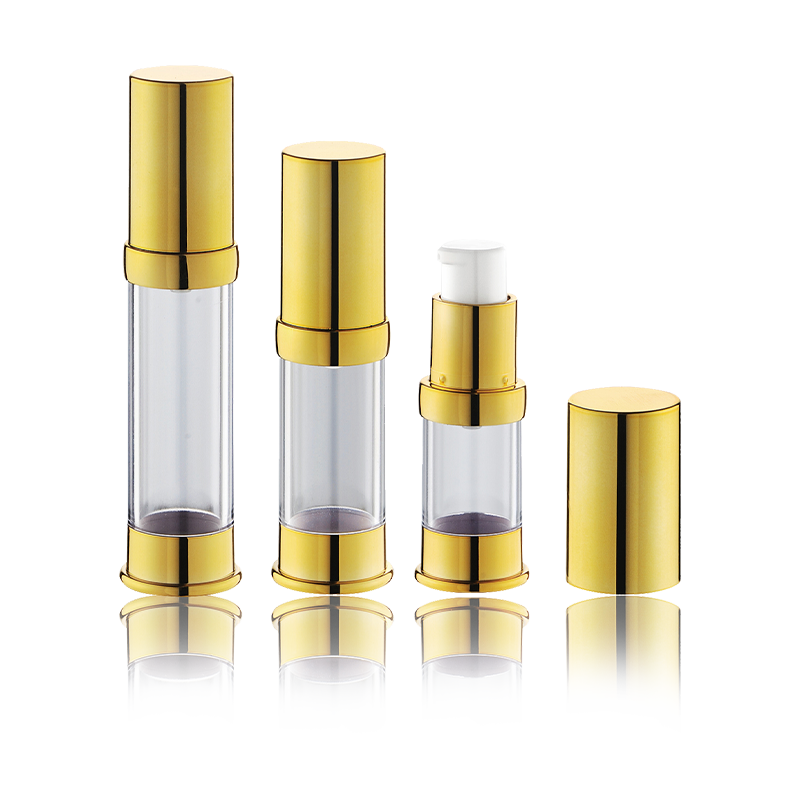 HS-001A Vacuum Bottle with CR Closure OptionsThis modular airless bottle fits various CR closure styles and pump outputs, with capacities from 5 to 15 ml, making it a flexible choice for child-resistant packaging.View Product →
The hs001a platform is documented for its dimensional consistency and compatibility with metal-free airless pump systems.
How to Select a Child Resistant Airless Bottle
Selecting the right CR airless bottle comes down to four areas: regulatory target, formula compatibility, closure reliability, and supplier capability.
Use this practical checklist before requesting samples or sending drawings to a supplier:
- Confirm the regulatory target. Determine whether your product falls under 16 CFR 1700, ISO 8317, Canada CGSB, or a combination, and share that with the supplier.
- Test the closure with your actual formula. The same CR cap can perform differently on a high-alcohol serum versus a thick cream because lubricity changes opening torque.
- Request the child resistance test report. It must cover the exact bottle, pump, closure, and torque used in production.
- Check adult openability. Verify the cap is usable by your core audience, including older consumers with reduced grip strength.
- Confirm decoration options. Ensure the supplier can apply screen printing or hot stamping without affecting mechanical performance.
Supplier capability matters more than catalog breadth. A manufacturer that performs in-house molding, printing, and assembly can control the variables that influence CR performance, such as mold temperature and capping torque. Ask whether they will assemble and torque-test the full unit before shipment.
You can browse the vacuum bottle product pages to shortlist standard airless bottle bodies and pump configurations before requesting samples.
For a compact, cost-effective CR airless configuration suitable for travel sizes, the hs017a series balances pump output and cap height with standard neck finishes.
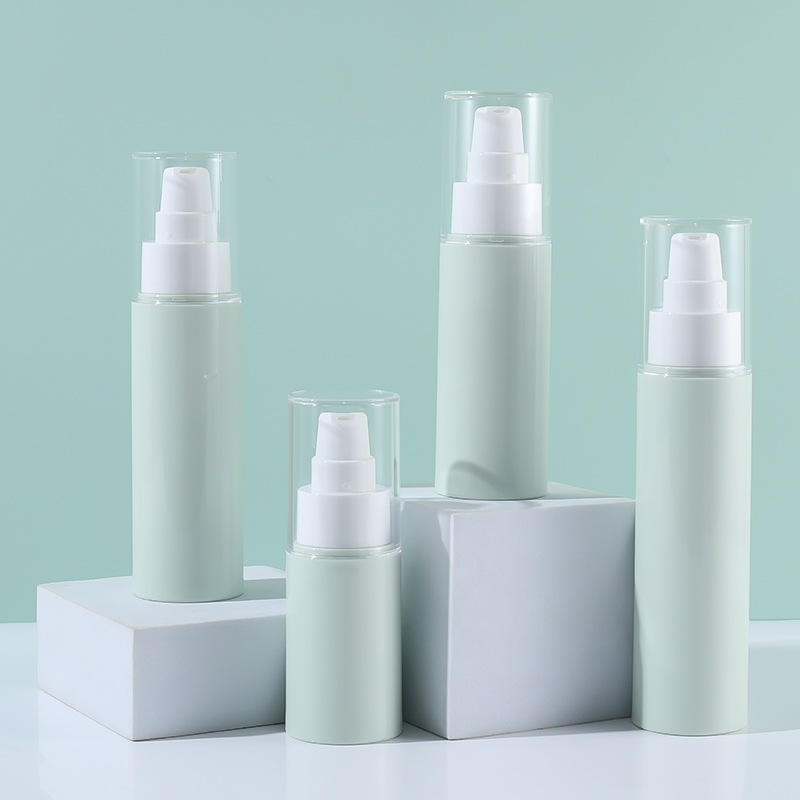 HS-017A Airless Bottle in 50 to 120 ml SizesFeaturing a matte white body and brown cover, this airless bottle offers multiple volumes and screen-printing options, ideal for comparing sample-stage design details.View Product →
Reviewing different vacuum bottle models at the sample stage helps you compare wall thickness, neck finish, and cap compatibility before finalizing the design.
Common Applications
Child resistant airless bottles are most commonly used in four product categories: active skincare, CBD and hemp topicals, essential oil blends, and OTC or prescription topical medications.
- Active skincare: serums containing retinol, alpha hydroxy acids, or hydroquinone are oxygen-sensitive and potentially irritating to children. The airless system preserves actives, while the CR cap prevents accidental ingestion.
- CBD and hemp topicals: CBD isolate and full-spectrum extracts can contain compounds that trigger child safety labeling, and many state regulators require CR packaging for these products.
- Essential oil blends: high-concentration essential oils are classified as hazardous household substances under the U.S. Poison Prevention Packaging Act when they contain skin irritants.
- OTC and prescription topicals: products such as lidocaine creams and topical NSAIDs fall under 16 CFR 1700 when their labeling requires child resistant packaging.
In all four categories, the airless bottle adds measurable value by eliminating air intake, which reduces oxidation and allows formulators to lower preservative levels. The result is a cleaner ingredient list and longer on-shelf life, both of which resonate with modern consumers.
Brands developing a new product can pair a CR closure with a proven airless platform such as the hs024a vacuum bottle to accelerate the development cycle.
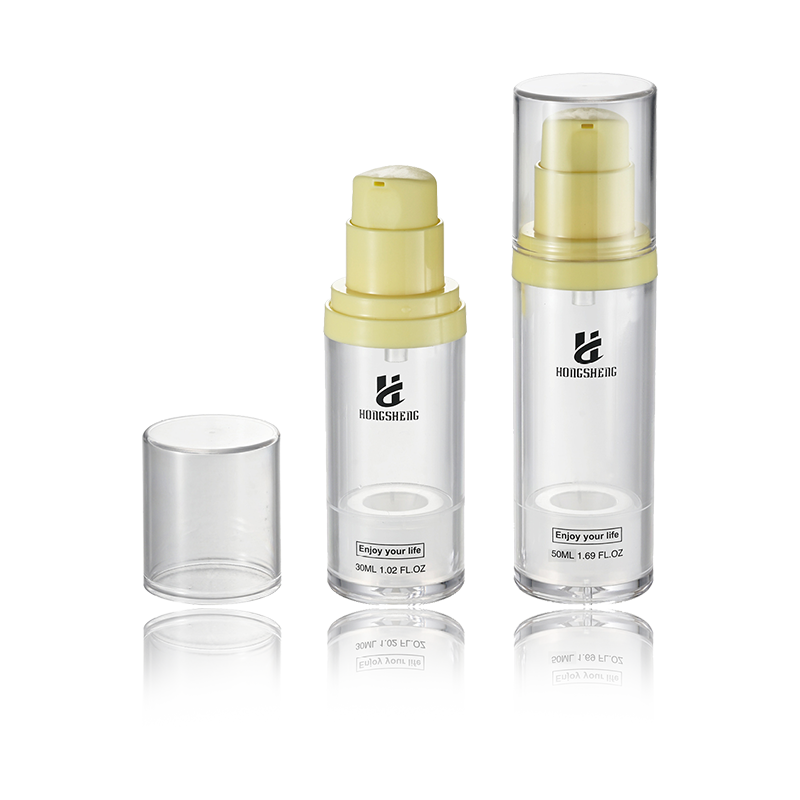 HS-024A Vacuum Bottle for CR Cap AdaptationThis vacuum bottle platform supports both screw and CR caps, with 30 ml and 50 ml sizes, helping speed up development when pairing a proven airless system with a new closure.View Product →
This model supports multiple finish sizes and adapts well to both conventional screw caps and CR cap configurations.
FAQ
Are airless bottles child resistant by default?
No. A standard airless bottle uses a simple screw cap or flip-top, which a child can open. Child resistance comes from the closure, not the bottle or pump. Confirm the closure is certified to ISO 8317 or 16 CFR 1700.
What is the difference between child resistant and senior friendly?
A CR closure must pass both sides: a child panel must fail to open it, and an adult panel must succeed. Some closures also meet ISO 17402, where the adult panel is aged 50 to 70 with reduced grip. Specify senior-friendly if your brand targets older consumers.
How many units are needed for CR certification testing?
Typical protocols require roughly 200 packages for child testing, 100 for adult testing, plus units for controls. Exact quantities depend on the standard and laboratory.
Can an existing airless bottle be converted to child resistant?
Sometimes, but rarely a simple cap swap. The actuator must fit the new CR cap height, the neck finish must match, and the opening torque must be recalibrated. A full CR test on the assembled unit is required.
Conclusion
Child resistant airless bottles solve two problems at once: they keep oxygen out of sensitive formulations and keep children out of potentially hazardous products. The selection process is straightforward when you identify the regulatory standard for your target market, verify that the bottle-and-closure combination has been tested as a complete unit, and choose a supplier with in-house molding and assembly capabilities.
With the right technical data and manufacturing partner, adding CR functionality to an airless bottle is a manageable step that protects consumers, brand reputation, and regulatory standing.