
 English
 中文简体
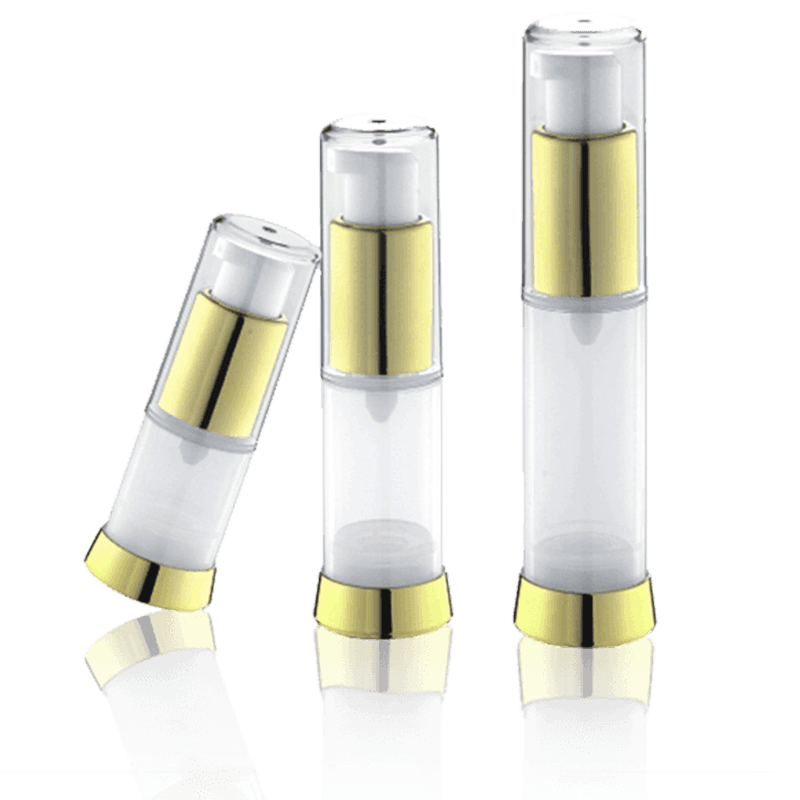
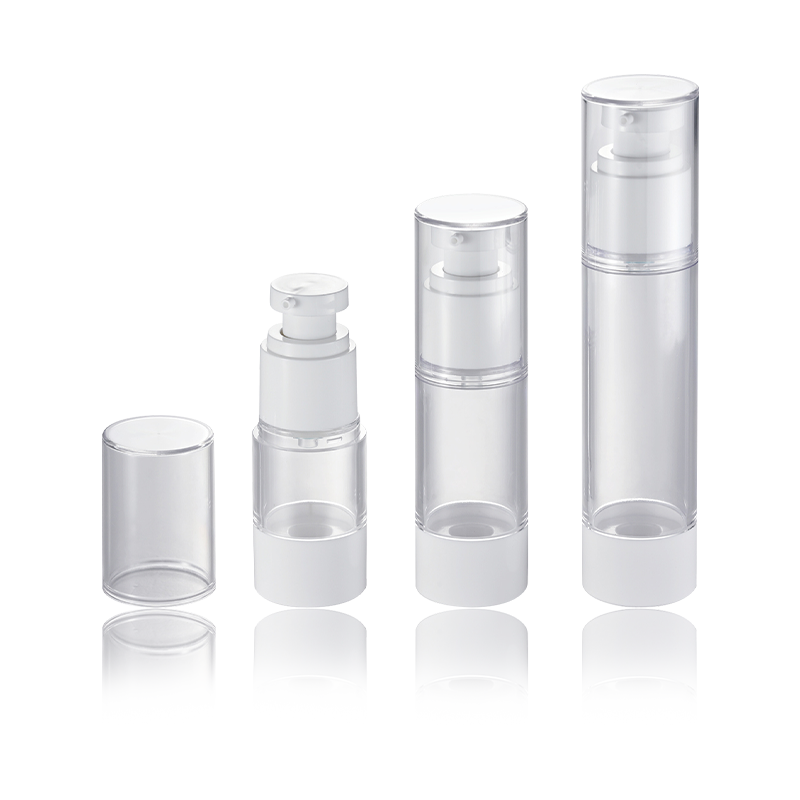
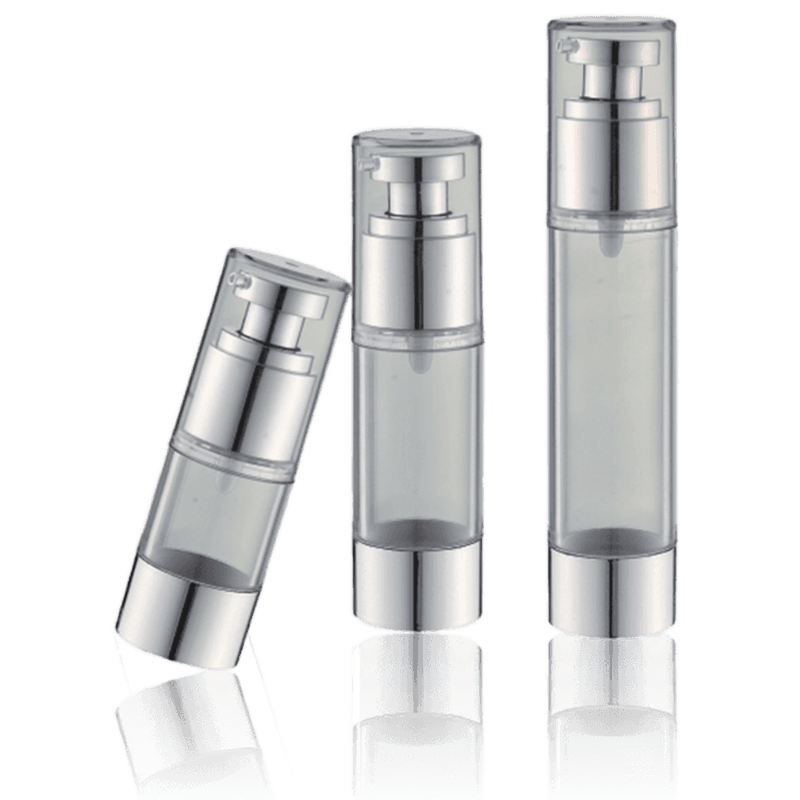
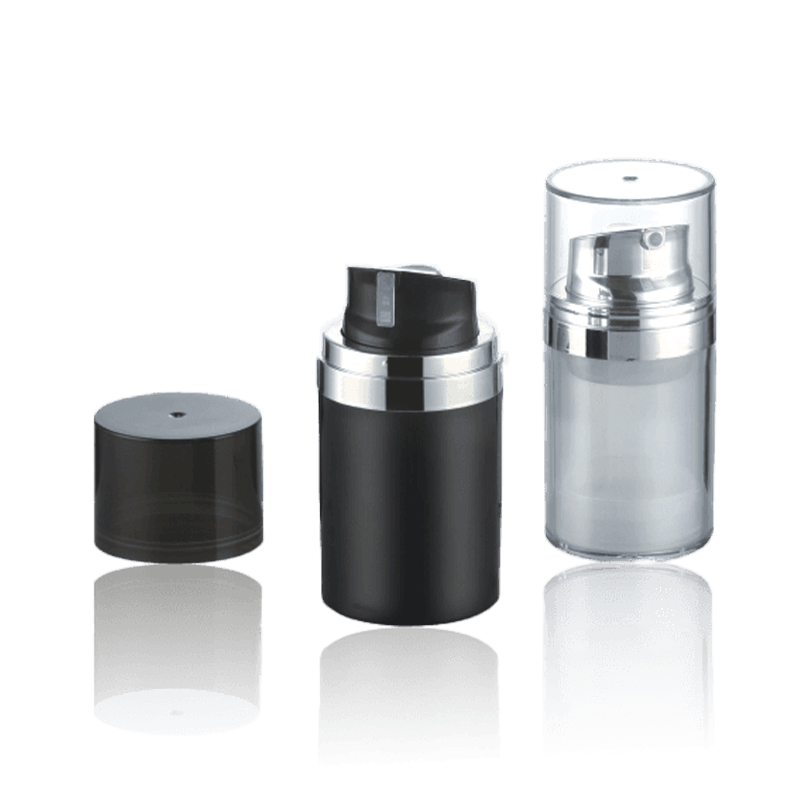
An airless bottle for serum is a rigid container that holds the formula above a sliding piston and delivers it through a metered pump, so no air enters the bottle between uses. For vitamin C, retinol, peptide and enzyme serums, that single design choice protects the active far more reliably than a dropper, and the unit cost penalty is normally small compared with the value of the fill inside.
The short answer on specification: match the pump engine to the formula's viscosity, size the bottle by dose per stroke and intended use period, and clear drop testing and compatibility testing before you approve tooling. Colour, decoration and cap style can be changed far more cheaply later — the piston and pump decision cannot.
How an airless serum bottle works in practice
The mechanism is simple, but it changes what you can honestly promise on the label: there is no dip tube and no return air path, so the headspace stays effectively at zero from filling to the last dose.
- A piston sits beneath the fill and seals against the bottle wall.
- Each pump stroke draws a fixed volume from the piston face; a metered dose of roughly 0.15 to 0.25 ml is typical for facial serums.
- Air cannot re-enter, so the formula meets oxygen only during filling and during the first actuation.
- Because the pump draws directly from the piston face, evacuation is high — little product is stranded at the bottom.
Two practical consequences follow. Thin, water-like serums need a pump engine with tight dimensional control, otherwise the dose drifts and the product spits. And because the bottle cannot be topped up, capacity should be sized to the use period you intend to claim: 30 ml at 0.2 ml per dose, used twice daily, gives about 75 days — enough margin for a "three-month supply" claim without a large overfill.
A broader primer on piston mechanics and component pairing is available in this guide to cosmetic airless bottles, which is worth reading before you fix a bottle-and-pump combination.
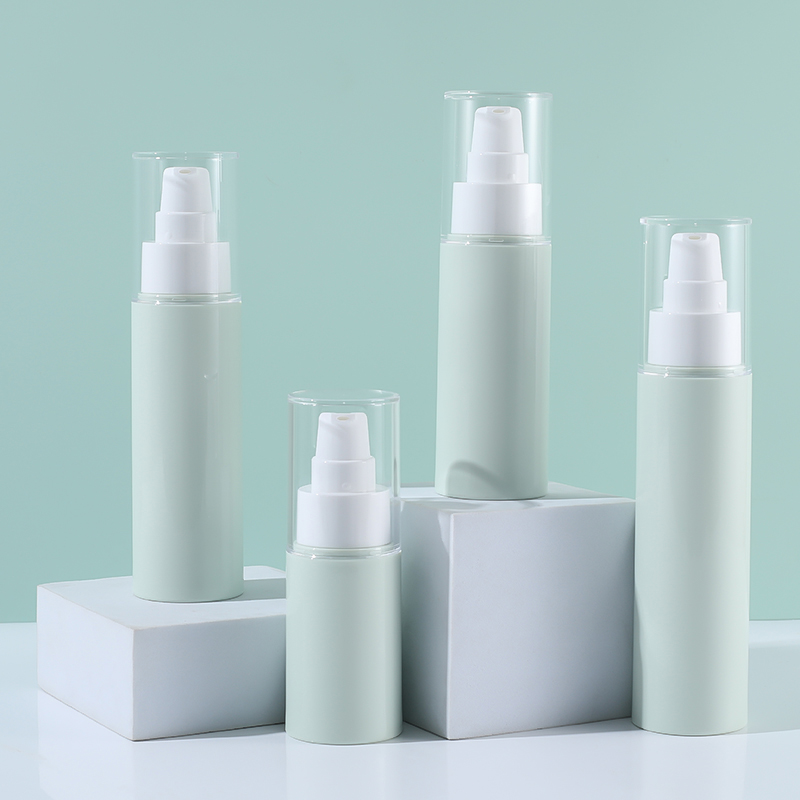 Airless Bottle HS-017AThis airless bottle has a white bottle body, with a brown cover. The bottle body and cap are done matte treatment. The overall appearance is beautiful and atmospheric,...View Product →
Existing airless and vacuum bottle tooling usually decides the fastest route to a sample: the airless and vacuum bottle range shows the diameters and neck finishes already in production, which is often quicker than designing a new shell.
Why serums need airless packaging more than creams do
Water-based serums lose value faster than creams because they carry delicate actives in a thin carrier with little oil to buffer oxidation or pH drift.
- Oxidation and colour shift. Vitamin C and botanical extracts discolour quickly once oxygen is present; a sealed piston system slows that visibly.
- Preservative pressure. A closed system reduces microbial challenge during use, which can allow a simpler preservative system — but it never removes the need for challenge testing.
- pH and potency stability. Actives held away from air and repeated opening tend to stay within specification for longer.
- Dose accuracy. Consumers stop over-pouring; a metered dose also makes "one pump per application" instructions credible.
- Waste and residue. High evacuation matters when the fill is expensive; a dropper typically leaves more behind.
- Orientation freedom. Because the piston, not gravity, feeds the pump, the bottle dispenses at almost any angle — useful for travel sizes and bedside use.
Airless bottle versus dropper and standard pump bottle
The right format depends on the formula and the retail channel, not on fashion; the table below shows where each option realistically sits for serum packaging.
| Format | Air exposure during use | Dose consistency | Product left at end of life | Typical fit |
|---|---|---|---|---|
| Airless bottle with piston | Minimal — no return air | High, metered per stroke | Low residue | Actives, premium serums, travel sizes |
| Standard pump with dip tube | Air enters as product leaves | Moderate, varies with fill level | Moderate to high residue | Stable, cost-driven lines |
| Dropper bottle | Full air exchange at every opening | Low, user-controlled | Notably high residue | Oils, treatments, small batches |
| Squeeze tube | Air drawn in on refill | Low | Moderate | Gels, thick textures, sampling |
Specification checklist before you order samples
Five variables decide whether an airless bottle works for a given serum, and they should be settled in this order before decoration is discussed.
1. Capacity and headspace
Size the fill to the dose count you want to claim, then check how much headspace the piston needs. A 30 ml nominal bottle rarely holds 30 ml of liquid.
2. Dose per stroke
Ask for the measured output of the specific pump engine, not a catalogue average. Expect a tolerance band and test it with your own formula.
3. Viscosity window
Thin serums and gel serums behave differently in the same pump. Send the real formula, at the real fill temperature, for a dispensing trial.
4. Materials and barrier
PP bodies suit most water-based serums; an outer shell in AS or PETG adds gloss and weight. Confirm compatibility with the formula's solvent and fragrance load.
5. Neck finish and closure
Match the collar thread to the pump, and fix the cap style early — a butterfly or disc cap changes stack height, carton size and shipping cost.
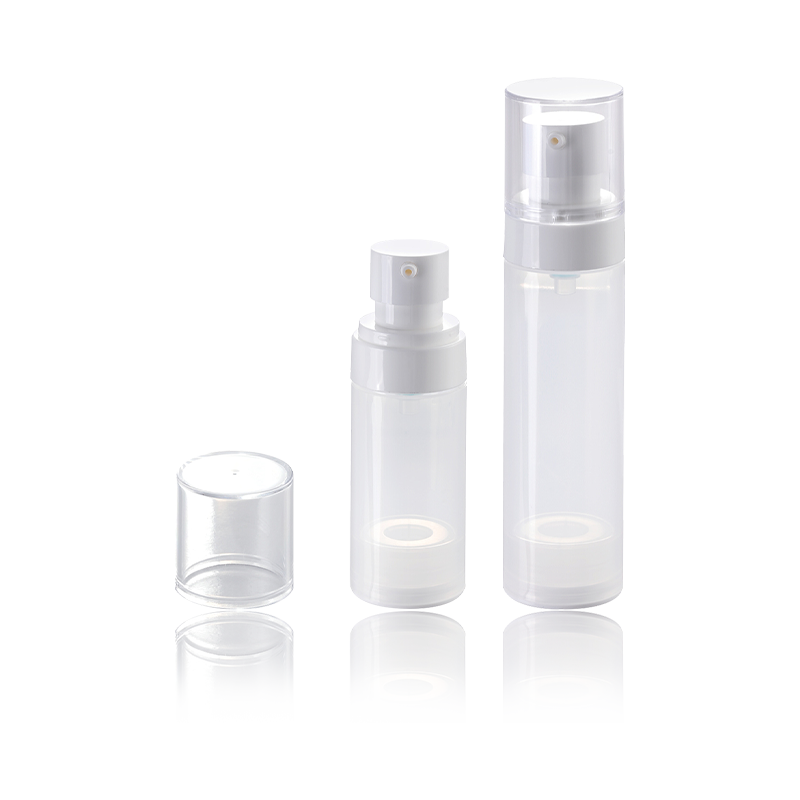 30ml/50ml Frosted Airless Bottle with ABS ShellAvailable in 30ml and 50ml sizes with a 33mm diameter, its vacuum pump and PP liner help isolate active skincare ingredients.View Product →
Where a serum is sensitive to light as well as air, an opaque or heavily decorated body removes the need for a secondary carton in some markets; where it is not, a clear body with a printed label keeps tooling cost down. Either way, request a dimensional tolerance table with the quotation — injection-moulded components commonly run within roughly plus or minus 0.2 mm on critical dimensions, and you need to know which dimensions are critical before you design a secondary pack around them.
Where airless serum packages fail in the field
Most complaints trace back to three areas — the piston, the decoration, and a formula that was never actually tested inside the pack.
- Leakage at the shoulder or collar after distribution drops, usually a torque or gasket issue rather than a mould issue.
- Air pockets or piston drift after air freight, caused by pressure changes when the base has no venting strategy.
- Formula separation inside the pump chamber, common when a gel serum is paired with a pump specified for low-viscosity liquids.
- Decoration failure, such as peeling or colour mismatch, when hot stamping or coating is approved from a digital file rather than a physical proof under D65 lighting.
- Over-torqued collars on the filling line, which distort the piston seal and cause short doses.
Before mass production, ask for a drop test report, an ageing test at elevated temperature for four to eight weeks, and a dispensing test at 25, 50 and 90 percent of fill. If a supplier cannot provide all three, the unit price is not the number you should be comparing.
Cost, material and refill considerations
An airless serum bottle costs more per unit than a dropper bottle — commonly in the region of 20 to 60 percent more at the same volume — but the gap narrows once you count overfill allowance, breakage, returns and the perceived value of the pack.
- Monopolymer PP construction keeps recycling streams simple and is usually the lowest-cost compliant option.
- Post-consumer recycled PP is workable for the outer body in many projects, but colour consistency must be agreed in writing before tooling.
- Refill inserts and inner cups reduce plastic per use and support refill claims, at the cost of a more complex filling line.
- Decoration is often 15 to 30 percent of the piece price; simplifying to one print pass is the fastest cost lever.
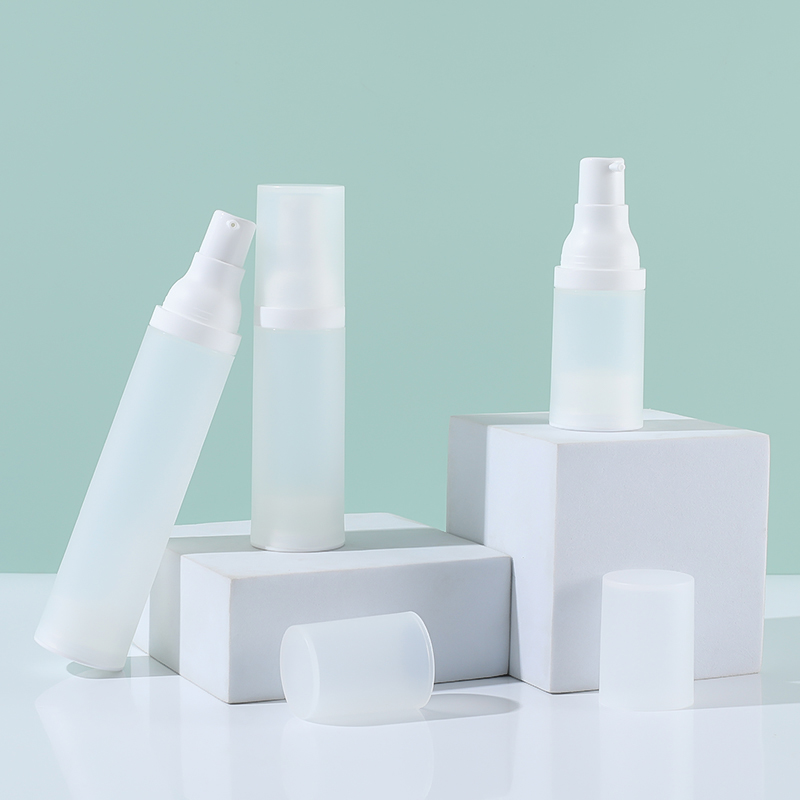 Airless Bottle HS-013AThanks to the airless system, this type of container allows to avoid any contact between the content and ambient, protects cosmetic compositions or aromatherapy from o...View Product →
FAQ
Can a 15% vitamin C serum go into an airless bottle?
Yes, and it is one of the strongest cases for the format, but confirm the formula's pH and solvent load against the piston and pump materials first, and specify an opaque body if light sensitivity is a concern.
What capacity suits a trial or travel size?
For a two-week trial at two doses daily and 0.2 ml per dose, 5 to 10 ml of usable fill is realistic; check the piston travel, because small bottles lose proportionally more of their nominal volume to headspace.
Does an airless bottle remove the need for preservatives?
No. It reduces microbial challenge during consumer use, which may allow a simpler system, but every formula still needs preservative efficacy testing in the final pack.
Can an airless serum bottle be refilled?
Only if the design includes a replaceable inner cup or a refill cartridge with a defined opening mechanism. Standard sealed units are not intended for refilling and should not be marketed as such.
Is it suitable for oil-based serums?
Usually yes, provided the pump and piston elastomers are rated for the oil. Viscosity and lubricity change the dose, so a dispensing trial with the finished formula is essential.
What dose per stroke should I choose?
Most facial serums sit between 0.15 and 0.25 ml per stroke. Choose the lower end for concentrated actives and the higher end for body or facial oils where a full application needs more volume.
Before comparing quotations, ask every supplier the same four questions: which pump engine is inside, what dose it delivers with your formula, what the evacuation rate is at end of life, and which tests come with the sample. The answers separate a genuine airless serum package from a standard bottle with a piston added as an afterthought.