
 English
 中文简体
中文简体A double wall airless bottle is a two-layer cosmetic container with an inner chamber and an outer shell, sealed by an airless pump that dispenses product without letting external air back in. Because the inner chamber collapses or moves upward as product is removed, oxygen is kept away from the formula throughout its life. This is the packaging structure behind many premium serums, creams, and lotions where stability and perceived value are equally important.
What Is a Double Wall Airless Bottle?
A double wall airless bottle is not a single bottle with one thick wall; it is two independent molded components assembled together. The outer shell defines the size, shape, and decoration surface, while the inner bottle actually holds the formula. The two walls are fitted precisely, and an airless pump is mounted on top.
The air gap between the layers gives the bottle a dense, premium hand feel and can create a visual floating effect when the inner chamber is transparent or colored. Typical components include:
- Outer shell: visible structural layer that can be clear, tinted, painted, or electroplated.
- Inner bottle or insert: holds the formula and collapses or rises as the product is dispensed.
- Airless pump closure: controls dosing and prevents air from re-entering.
- Base piston or collapsible bladder: keeps product moving upward.
- One-way valve and inner seal: direct the flow and maintain the vacuum.
This arrangement is sometimes called a double-wall vacuum bottle or a double-layered airless container, but the construction principle remains the same.
Why Do Brands Choose Double Wall Airless Bottles?
Brands choose double wall airless bottles because they improve formulation stability and simultaneously lift the unboxing experience.
- Oxygen protection: the airless mechanism stops oxidation of actives such as vitamin C, retinol, and peptides.
- Longer shelf life: less oxidation usually means less need for high preservative levels.
- Precise dosing: pump outputs can be matched to the product type, from 0.2 ml serum doses to 0.5 ml cream doses.
- Premium feel: the dual-wall structure feels heavier and more substantial in the hand, similar to thick glass.
- Design freedom: inner and outer layers can use different colors, textures, and decorative effects.
- Minimal waste: airless systems evacuate nearly all the formula compared with dip-tube bottles.
Because of these advantages, double wall styles are common in prestige skincare ranges, clinical beauty brands, and high-end makeup lines.
Single-Wall vs. Double-Wall Airless Bottles: A Practical Comparison
The main difference is structural: a single-wall airless bottle has one molded chamber, while a double-wall airless bottle adds an outer shell and an inner container.
| Feature | Single-Wall Airless Bottle | Double-Wall Airless Bottle |
|---|---|---|
| Construction | One molded body with pump | Outer shell plus inner bottle with pump |
| Hand feel | Light and straightforward | Heavier, denser, more premium |
| Visual effect | Color is limited to the material or label | Transparent shell can create a floating inner layer; two-tone effects possible |
| Protection | Good if material has a high barrier | Better thermal and mechanical insulation from the air gap |
| Cost | Lower tooling and unit cost | Higher tooling and assembly cost |
| Best suited for | Entry-level products, travel sizes, cost-conscious lines | Hero products, anti-aging treatments, prestige positioning |
If you are launching a simple daily moisturizer at a competitive price, a single-wall airless bottle may be sufficient. For a brand hero serum or an anti-aging cream where stability, sensory experience, and premium shelf presence are decisive, the double-wall structure is the stronger sourcing choice.
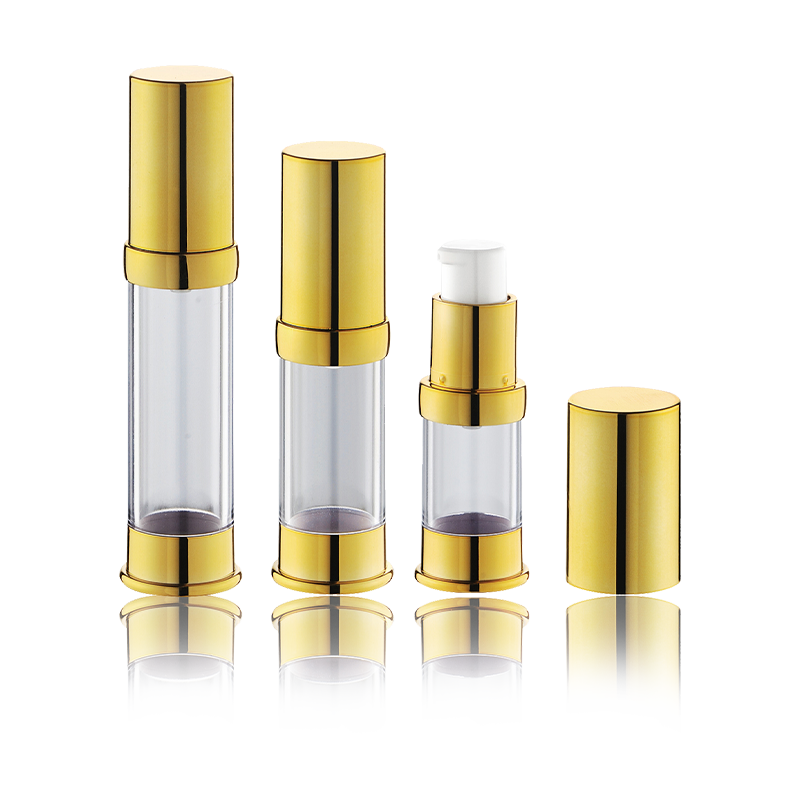 Single-Wall Vacuum Bottle HS-001A in 5 to 15ml SizesThis compact vacuum bottle suits budget-friendly daily moisturizers, offering 5, 10, and 15ml capacities with a uniform 20mm diameter. Its simple structure provides adequate protection for basic formulations while keeping costs competitive.View Product →
How the Airless Pump System Works
An airless bottle uses a piston or a collapsing inner chamber to create a vacuum behind the product, so the formula is pushed toward the pump without external air entering the container.
- Pressing the actuator compresses the spring chamber inside the pump.
- The chamber expands on release and creates a low-pressure zone.
- Product is drawn through a one-way valve into the pump chamber.
- The inner piston or base rises to fill the empty volume left by the dispensed product.
- On the next press, product is expelled and the cycle repeats.
This design explains why airless bottles perform better with oxygen-sensitive ingredients and why they are often chosen for formulas that cannot tolerate repeated exposure to air.
Key Materials and Design Considerations
To specify a reliable double wall airless bottle, you need to check material compatibility, capacity, pump output, and decoration at the same time, because each decision affects the others.
Inner and Outer Material Combinations
The inner bottle is commonly polypropylene or polyethylene because both offer good chemical resistance and tolerate hot filling. The outer shell is usually PETG, acrylic, styrene-acrylonitrile, or polypropylene when cost control matters more than clarity.
Always test the formula with the inner material. Oily formulas, essential oils, and certain preservatives can stress polymers that are not chemically compatible.
Capacity and Dimensions
Common double wall airless sizes start at 15 ml and go up to 200 ml, with 30 ml, 50 ml, and 100 ml covering most serum and cream launches.
- 15 ml: eye cream, spot treatment
- 30 ml: active face serum
- 50 ml: daily cream or lotion
- 100 ml: larger essence, body treatment
Check the neck finish, pump thread, and overall height before designing labels or cartons.
Pump Dosage and Viscosity
Airless pumps are available with outputs from 0.2 ml to 1.0 ml per stroke. Thin serums work well with 0.2 ml outputs; thicker creams need 0.4-0.5 ml or a specially designed cream pump.
Decoration and Surface Finish
The outer shell can be injection-colored, painted, electroplated, silk-screen printed, or hot-stamped. Because double-wall bottles have an air gap, you can also place decoration on the inner insert and let the transparent outer shell protect the printed result.
Spray or electroplating adds a luxurious feel but increases lead time; a glossy PETG shell with a pearl inner bottle is a simpler option that still looks premium.
Common Uses for Double Wall Airless Bottles
Double wall airless bottles are the default packaging type for oxygen-sensitive skincare formulas and premium personal care products.
- Vitamin C serums and retinol treatments
- Peptide and collagen boosters
- Sunscreens with unstable filters
- Lightweight moisturizers and milky lotions
- Luxury cream foundations and tinted bases
- Beard oils and premium after-shave essences
The structure works with both thin liquids and thick creams, as long as the pump and inner piston are correctly matched to the viscosity.
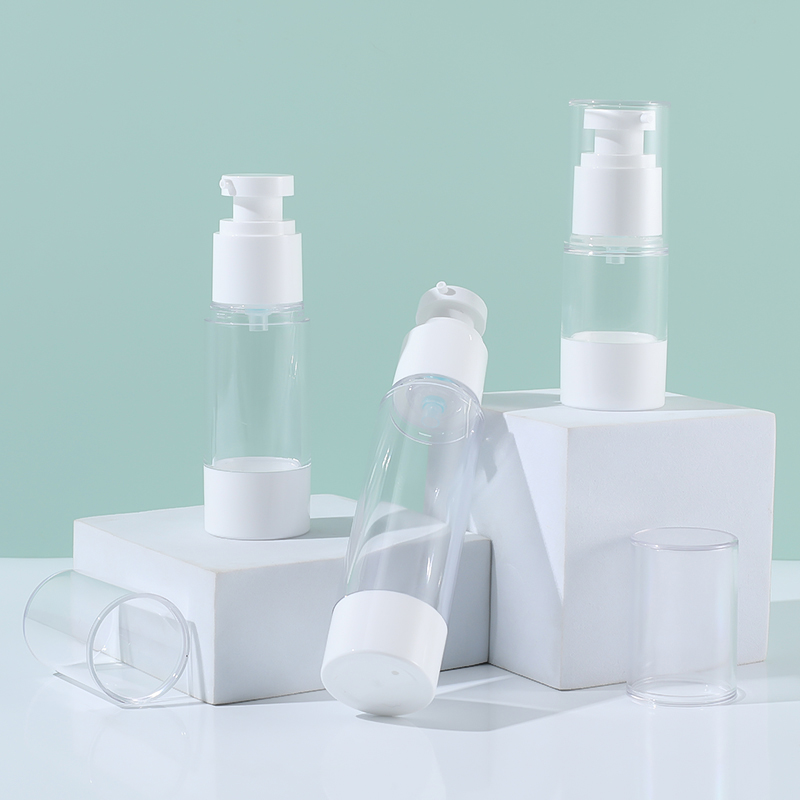 Transparent Airless Bottle HS-008B for Creams and GelsThis airless bottle protects contents from oxidation and contamination, with a clear body to check remaining product. It handles light to thick creams, gels, and foundations, and its efficient pump evacuates nearly every drop.View Product →
How to Choose a Double Wall Airless Bottle for Your Brand
The correct choice balances formula protection, visual identity, filling line compatibility, and unit budget.
- Define the formula viscosity, pH, solvent type, and filling temperature.
- Choose capacity and pump output based on how consumers use the product.
- Confirm that the inner and outer materials are compatible with your formula and preservation system.
- Select shell color, transparency, and decoration style.
- Order pre-production samples and run a real fill test.
- Verify pump dosing consistency, leak resistance, and the percentage of product actually evacuated.
- Plan enough time for mold making, sample approval, and large-batch decoration.
If your launch is time-sensitive, a stock double wall airless bottle with customized color and logo is the fastest route to market.
Customization and OEM Manufacturing
As a cosmetic packaging manufacturer, we produce double wall airless bottles from standard tooling and through custom molds, covering the full path from design to injection molding, printing, and electroplating.
For brands that need a quick start, our existing airless bottle range offers multiple shapes and sizes. Many of these designs can be specified with custom colors, pump finishes, logos, and packaging inserts without new tooling investment. Our airless bottle knowledge series explains the mechanical and compatibility choices in more depth.
If you send us a sample or drawing, our engineering team can quote the exact inner and outer material grades, surface treatment, and pump configuration needed for your product. We also support sample-based ordering, which is helpful when a customer has a design that is already close to a stock bottle.
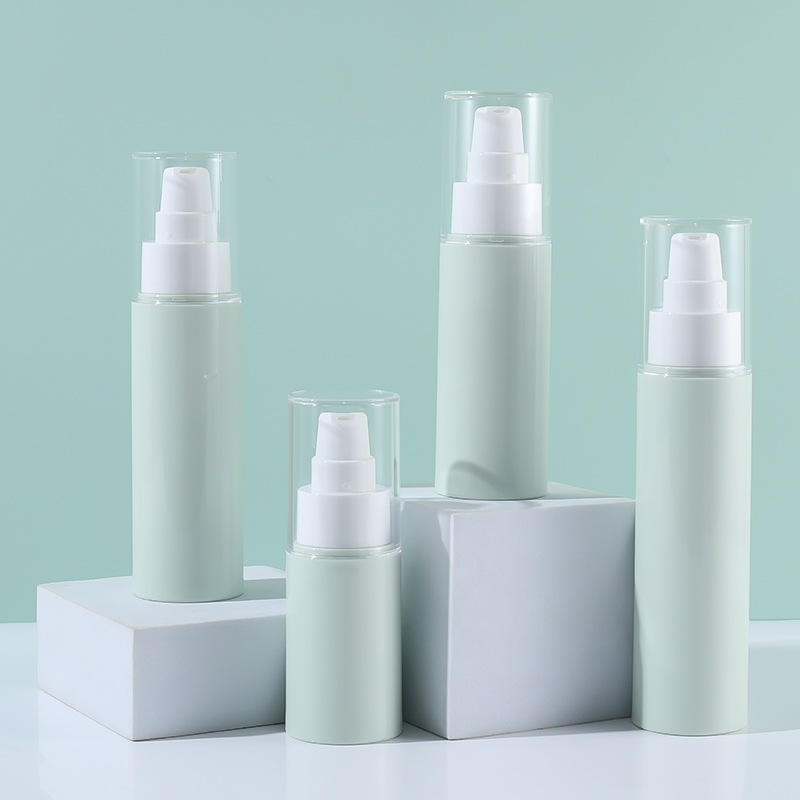 Matte-Finish Airless Bottle HS-017A in 50 to 120mlFeaturing a white matte bottle with a brown cap and screen-printed detailing, this airless container offers capacities from 50 to 120ml. Its premium appearance and robust structure make it a suitable choice for hero serums or anti-aging creams.View Product →
Frequently Asked Questions
What is the difference between a double wall airless bottle and a normal airless bottle?
A normal airless bottle has one wall, while a double wall airless bottle adds a separate outer shell. The extra layer gives a heavier feel, improves protection, and opens more design options.
Can double wall airless bottles hold thick creams?
Yes, as long as the pump is sized for high-viscosity products and the inner piston has enough surface to push the formula. A cream pump or 0.5 ml pump is often the right choice.
How much product is left in the bottle at the end?
Airless systems typically evacuate 95% or more of the formula, depending on the piston design and the viscosity of the product. This is significantly better than a standard dip-tube pump.
Are double wall bottles more expensive than single-wall?
In most cases, yes, because you are molding and assembling two components instead of one. However, the improved user experience and longer product stability often justify the cost for premium lines.
Can I custom mold my own double wall airless bottle?
Yes. Customizing requires tooling for the inner bottle, outer shell, and normally the pump and closure. For faster development, stock designs can be decorated or colorized first.
Choosing a double wall airless bottle is a formula and brand decision. The packaging must protect the active ingredients, fit the filling line, and communicate quality at the point of sale. Start with stock designs if speed matters, or invest in a custom mold if the shelf look is central to your product launch. Either way, verify materials, pump dosage, and decoration with real samples before making a final commitment.