
 English
 中文简体
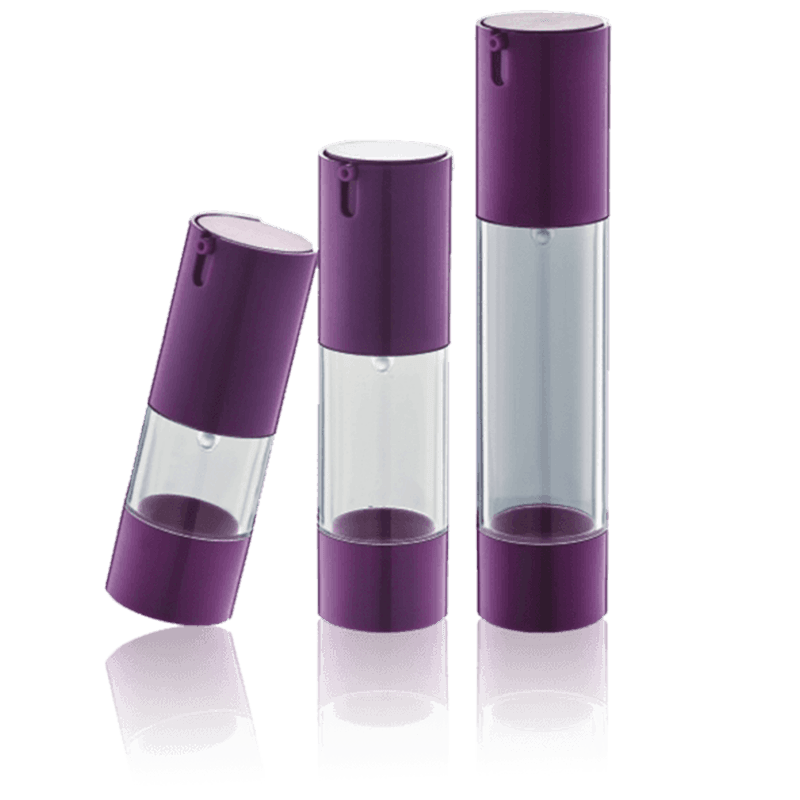
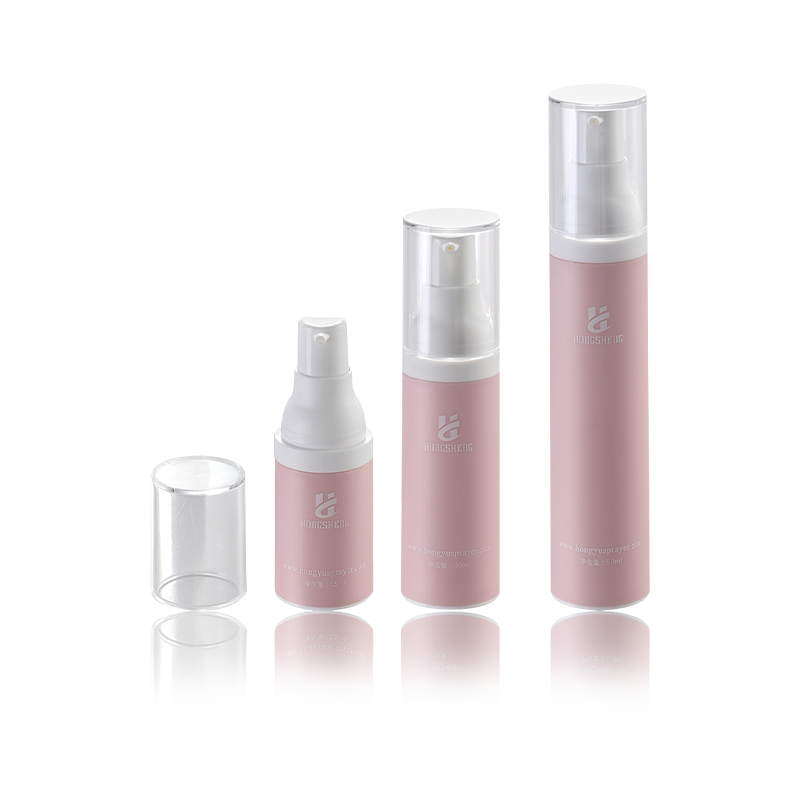
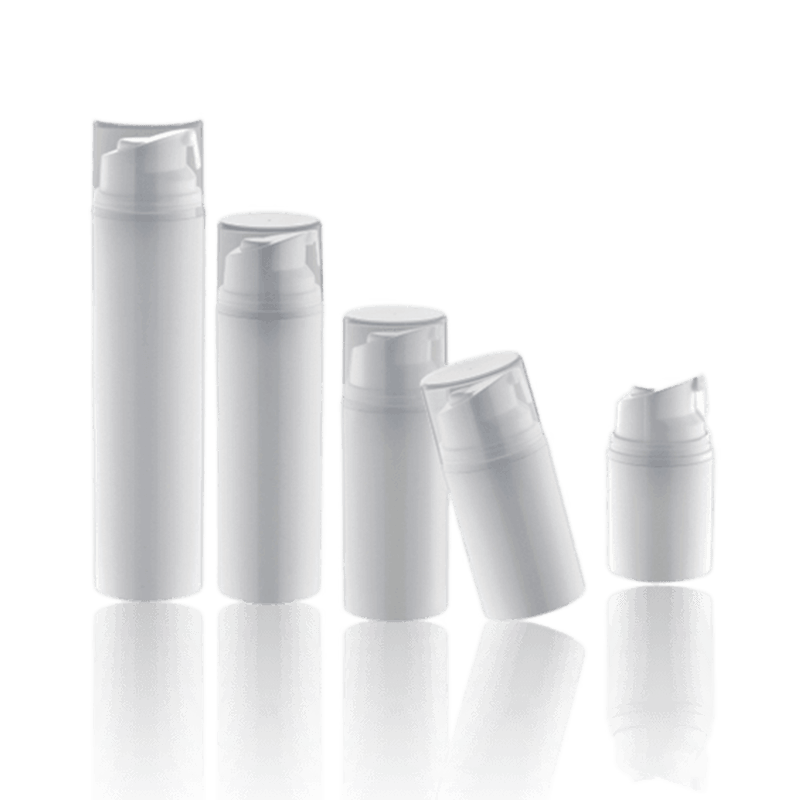
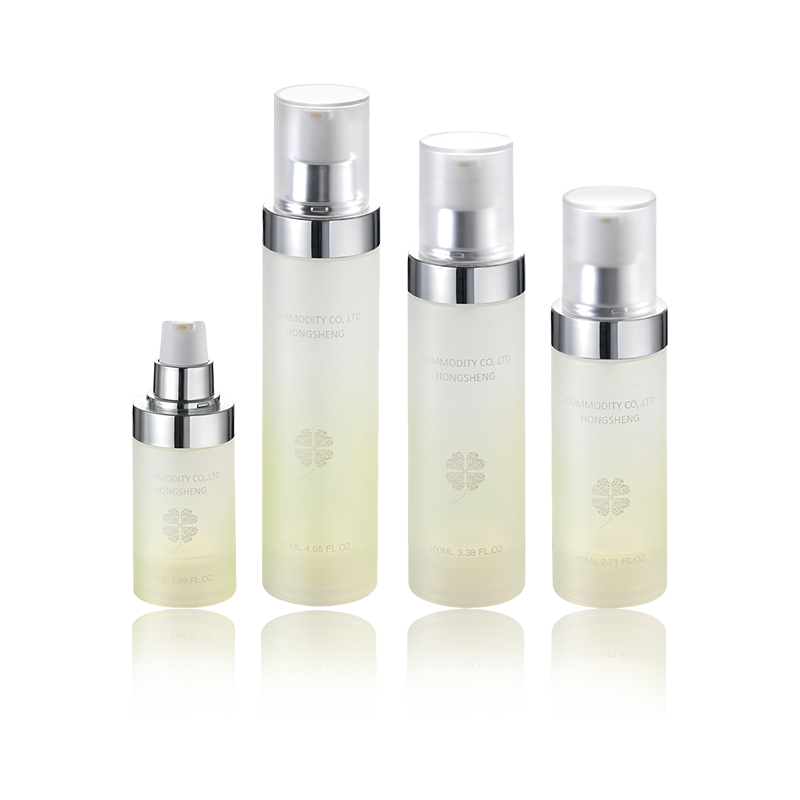
中文简体An airless bottle is a rigid cosmetic container with a follower piston inside the body: press the pump, the piston rises, and the formula leaves the pack without ever meeting air or being drawn up a dip tube. That one mechanical difference decides most of the buying question for you. Choose airless when the formula is oxygen-sensitive, built on a light preservative system, high in silicone or pigment, or expensive enough that a few percent of residue left in an ordinary bottle is money on the floor. Choose a standard dip-tube pump bottle when the formula is thin, water-clear, inexpensive, and the retail price cannot absorb a higher pack cost.
The rest of this guide follows the order in which the remaining decisions usually matter: how the mechanism behaves, which specifications to fix before you ask for quotations, how body material and shape move the price, how the pump and cap shape the user experience, and how compatibility testing keeps a good design from failing in the field.
How an Airless Bottle Works, and What It Changes for Your Formula
An airless pack delivers three practical gains and one practical cost. The gains: no air enters the pack, so oxidation and recontamination slow down; evacuation is close to complete, so a well-matched piston leaves very little behind; and with no dip tube, thick, silicone-rich or pigment-loaded formulas dispense evenly from the first press to the last. The cost is component count, since body, piston, pump engine, actuator and overcap must all be made and matched, which raises unit price and multiplies the tolerances that can drift.
That trade-off explains why airless is standard for facial serums, vitamin C and retinol products, foundations and premium body care, and rare for toners or micellar waters. For a longer technical walk-through, this overview of cosmetic airless bottle knowledge covers the mechanism in more detail.
Specifications to Fix Before You Ask for a Quotation
Fixing these nine points first is the single biggest time-saver in an airless project, because most quotation delays trace back to one of them being left open. Put them in the written brief, not in the email thread.
| Specification | What to state | Why it matters |
|---|---|---|
| Nominal capacity | 15, 30, 50, 100 or 120 ml body | Body diameter drives mould size and carton footprint |
| Fill volume | Target millilitres plus headspace rule | The piston needs travel room; overfilling causes leakage |
| Body material | PP, PET, PETG, acrylic or PCR blend | Sets clarity, gloss, wall thickness and recycling claim |
| Dose per stroke | For example 0.20, 0.30 or 0.50 ml | A wrong dose makes a serum feel watery or a cream feel heavy |
| Neck finish | Thread type and diameter | Must match the pump collar; mismatches leak |
| Actuator | Smooth, ribbed, nozzle type, overcap | Affects perceived quality and shipping protection |
| Decoration | Spray coating, hot stamping, silk screen, label | Adds process steps and lead time |
| Sealing target | Leak and weight-loss limits | Determines how much pre-production testing you need |
| Order quantity | First run and repeat run volumes | Custom moulds and decoration only pay off above a certain volume |
Body Material and Shape: Where Most of the Unit Cost Sits
The body is normally the most expensive single component, which makes material choice the fastest way to move cost by 20 to 40 percent. Polypropylene is the workhorse: opaque, chemically tolerant, inexpensive, and easy to finish with a matte or soft-touch spray. PET and PETG give you clarity and a thick-wall, glass-like look at a fraction of the weight of glass. Acrylic and SAN push further toward gloss and depth for prestige lines, at a higher price and often with a heavier wall.
Shape matters almost as much. A round body is cheapest to mould and easiest to fill; oval and square profiles buy a wider front panel for branding but demand tighter wall control and frequently a higher minimum order. The vacuum bottle range below shows how a production airless body is typically proportioned against its piston.
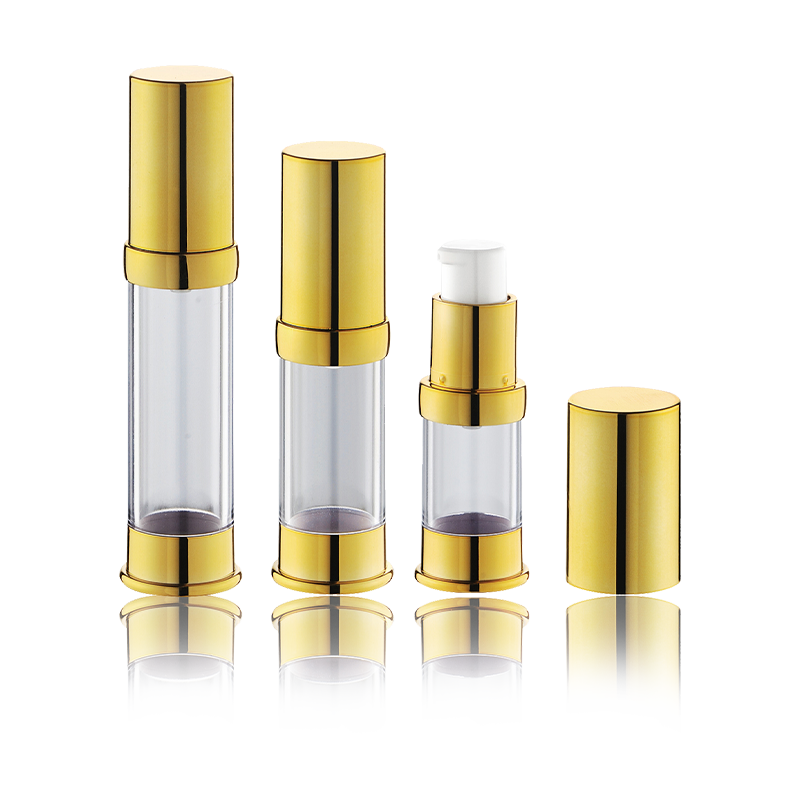 HS-001A Airless Vacuum Bottle with Precise Dosage ControlAirless cosmetic bottle in 5, 10, and 15 ml sizes, offering vacuum preservation, metered dosing, and high product evacuation for sensitive skincare formulas.View Product →
The Dispensing System: Dose, Pump Engine and Actuator
Dose per stroke is the specification buyers under-specify most often, and it is the one consumers notice first. Facial serums and eye products usually want 0.20 to 0.30 ml per stroke so the texture feels concentrated; creams, foundations and body lotions typically sit at 0.40 to 0.50 ml or above so a full application comes out in two or three presses. Always ask for the dose at a defined pressing force, not just a figure on a drawing.
Two further details decide whether the pack feels premium or cheap: whether the pump path is metal-free, which matters for actives that discolour on contact with a spring, and whether the actuator returns cleanly without a second drop forming at the nozzle. A representative pump engine from a matched series is shown here.
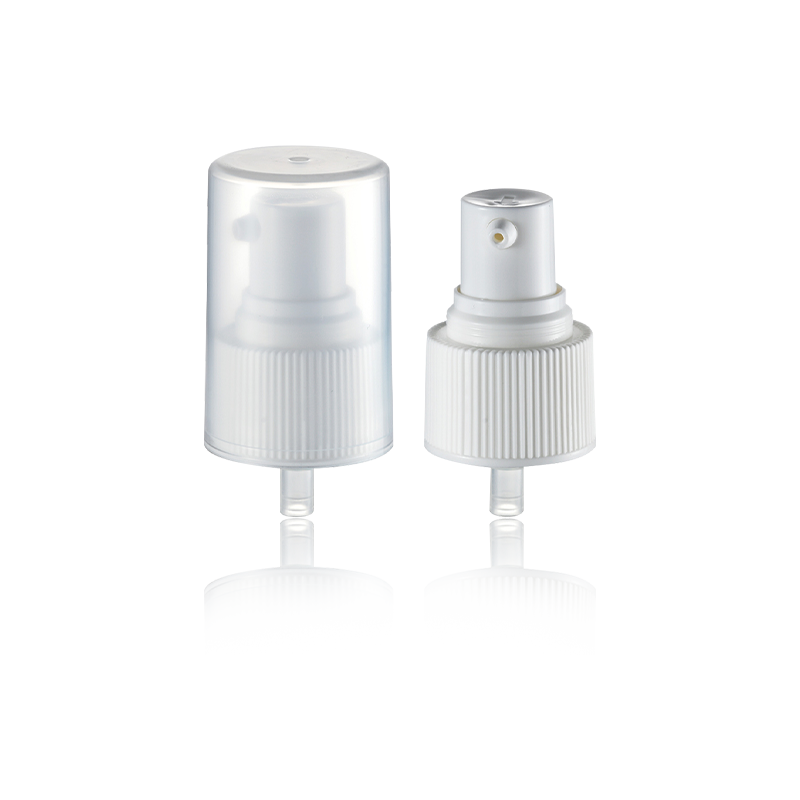 HY24A-01 Silky Spring Cosmetic Pump Head for SkincarePrecision press pump for lotions, essences, and sunscreens, designed for smooth rebound, controlled output, and leak-resistant dispensing in mid-to-high-end skincare packaging.View Product →
Closures and Caps: The Cheapest Place to Improve the Experience
The cap is the lowest-cost part in the pack and the one users touch most, so it is usually worth a second look. Screw caps and disc tops suit travel and handbag formats because they seal positively; flip-top and butterfly caps suit daily-use products where one-handed opening matters; a slim overcap that covers the actuator protects the pump in transit and often costs less than upgrading the pump itself. Check cap height against your shipping carton at the same time, because a few extra millimetres multiplied across a pallet is real freight.
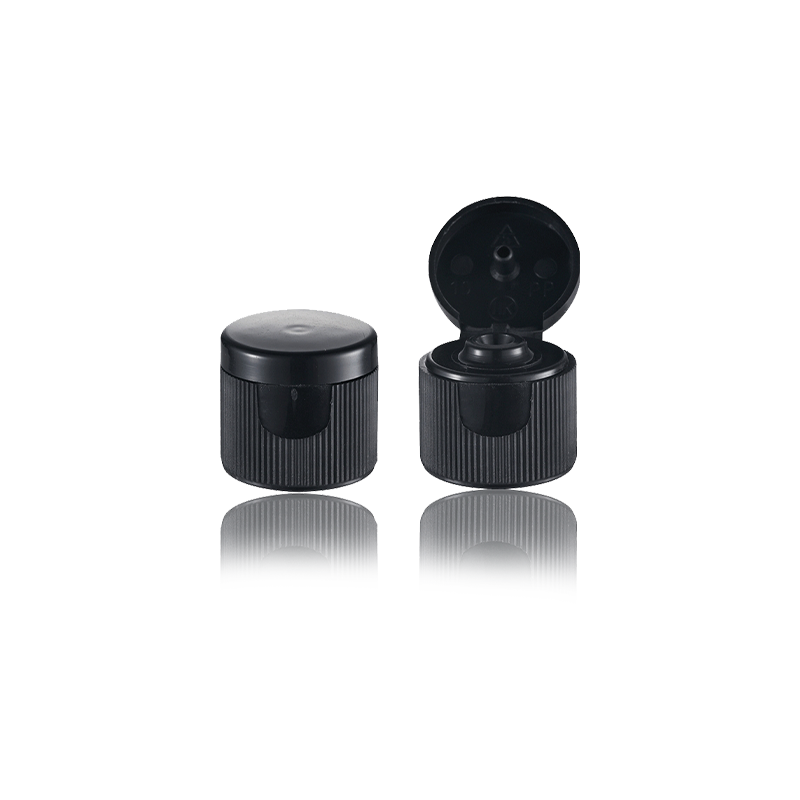 HY-F01 Black Butterfly Flip-Top Cosmetic Cap 18/410Black PP butterfly flip-top cap sized 18/410, suited to powder cosmetics with secure sealing and one-handed opening; useful when evaluating cap fit and shipping height.View Product →
Compatibility and Leak Testing: Where Airless Projects Fail
Most airless failures are compatibility or tolerance failures rather than design failures, and nearly all of them can be caught before tooling is cut. Run at least the following on the assembled, filled pack:
- Accelerated stability: four to eight weeks at 40 to 45 degrees Celsius, plus a freeze-thaw cycle, with packs standing upright and lying on their side.
- Weight-loss test: track the filled weight over time to detect slow leakage past the piston or the collar seal.
- Leak test under vacuum or pressure on the complete assembly, never on components separately.
- Drop test from carton height in the intended secondary packaging.
- Pump-out test at the end of the fill: measure residue and the force needed for the final strokes.
- Torque check on the collar, since over-torquing deforms the piston while under-torquing lets the actuator wobble.
Standard Bottle, Airless Bottle or Refill: A Direct Comparison
None of the three formats wins on every axis, so decide which two criteria you cannot compromise and let the rest follow.
| Criteria | Standard pump bottle | Airless bottle | Refill option |
|---|---|---|---|
| Formula protection | Air returns on every press | No air contact at all | Depends on the outer pack |
| Product evacuation | Dip tube leaves residue | Near complete with a matched piston | High, but harder to control |
| Unit cost | Lowest | Highest component count | Low refill, higher outer pack |
| Tooling and MOQ | Widest choice of stock moulds | More parts to match, higher MOQ | Often needs a new filling line |
| Best suited to | Toners, micellar water, simple lotions | Serums, foundations, actives | Brands with a refill commitment |
Working With a Custom Manufacturer Without Losing Weeks
Lead time is usually lost to unanswered questions rather than to production itself, so bring two things to the first conversation: a filled sample of your formula and a written list of the nine specifications above. A factory that runs its own injection moulding, printing and plating can adjust body, decoration and pump in one loop, while a trading intermediary has to relay every change. Ask which steps happen in-house, what the sampling lead time is, and how the piston is matched to your formula viscosity.
If you are still shaping the pack itself, these details of skin care product packaging design work well as a checklist for the aesthetic side of the brief.
Frequently Asked Questions
Is an airless bottle more hygienic than a pump bottle?
It is more protected, which is not the same thing. No air enters the pack and nothing flows back, so recontamination during use is lower, but the pack still has to be filled in controlled conditions and a preservative system is still needed unless the formula is designed to be self-preserving.
Does an airless bottle need special filling equipment?
Usually yes, or at least a different filling head. The piston must be seated below the formula and the pump crimped or snapped in one motion, so bottom-fill or vacuum-assisted equipment is common. Confirm this with your filler before the bottle design is frozen.
What dose per stroke should I choose?
Match it to how much product one use needs. If a serum application is about 0.5 ml and the consumer expects a few drops, a 0.30 ml stroke feels right; if it is a body lotion applied over both arms, 0.50 ml or more prevents endless pressing.
Can an airless bottle be refilled?
The body can usually be reused, but the piston and pump are not designed for consumer-level reassembly, so most refillable airless systems use a replaceable inner cartridge rather than asking the user to move the piston.
Start with the formula, not with the catalogue. If the product needs protection, airless earns its cost; if it needs volume at a low price, a standard pump bottle still does the job. Fix the nine specifications early, test the assembled pack rather than the parts, and the rest of the project is largely decoration.
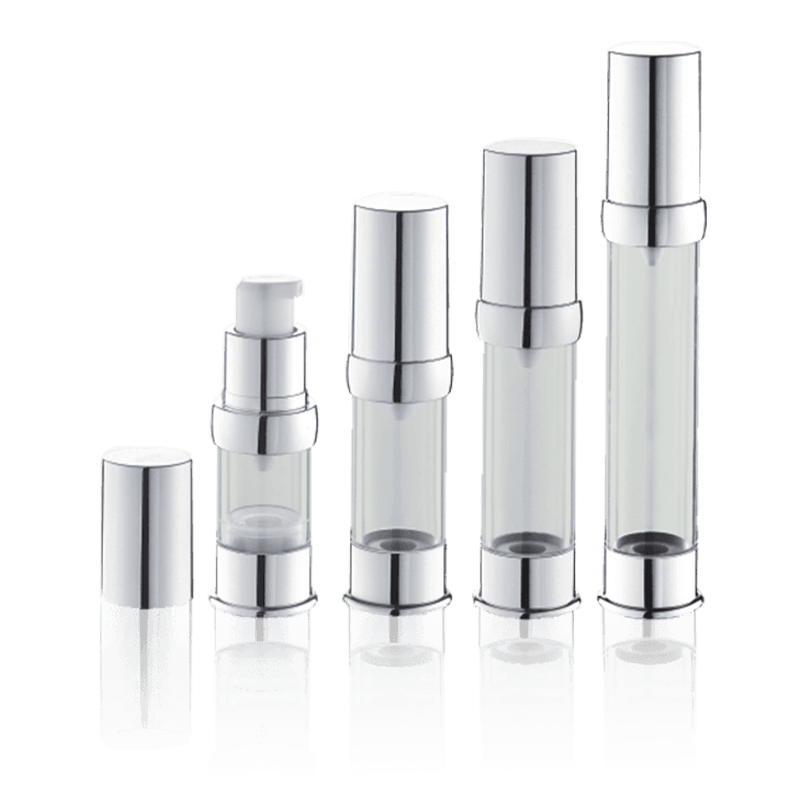
-1.png "10ML-30ML Precise and controllable Airless Bottle-HS-006A")