
 English
 中文简体
中文简体Your vitamin C serum looks stable in the lab, but after three weeks in a conventional pump bottle it starts to turn yellow-brown. The formula has not changed; the packaging has failed it. A trending airless bottle for makeup and skincare solves this problem by keeping oxygen away from the product throughout its entire service life. This article explains what an airless bottle is, why it has become a mainstream packaging choice for cosmetics, how it compares with traditional pump bottles, and which factors matter most when you source one in bulk.
What Is an Airless Bottle and How Does It Work?
An airless bottle is a sealed dispensing container that uses a movable piston at the base to push the product towards the pump head, so the liquid or cream is released without allowing outside air back into the bottle. That one detail, no air intake, is the core reason airless packaging protects sensitive makeup and skincare formulas better than a standard pump.
The Piston Mechanism Explained
In a typical airless bottle, the pump head is connected to a screw or snap closure at the neck. Inside the bottle, a piston sits below the product. When the pump is pressed, the piston rises, reducing the internal volume and forcing the formula out. After release, the piston stays in its new position, so no vacuum is created and no air can enter. Over time, the piston reaches the top and the container is considered empty, with only a tiny residue left on the walls. For a deeper look at piston and diaphragm systems, you can refer to our comprehensive knowledge guide on cosmetic airless bottles.
Key Components in a Cosmetic Airless Bottle
- Outer shell, which provides structural protection and carries the decorative finish.
- Piston or inner bag, which physically separates the product from the environment.
- Cap with crimping or screwing connection, which keeps the pump sealed on the bottle.
- Pump head, which controls flow rate from fine-dose serum to broad cream output.
- Actuator and collar, which give the bottle its final visual identity.
Why Airless Bottles Are Trending in Makeup Packaging
Airless bottles have moved from premium skincare into mainstream makeup packaging because they solve three practical problems that modern brands care about: short shelf life, wasted residue, and high preservative levels.
Longer Shelf Life for Oxidizable Actives
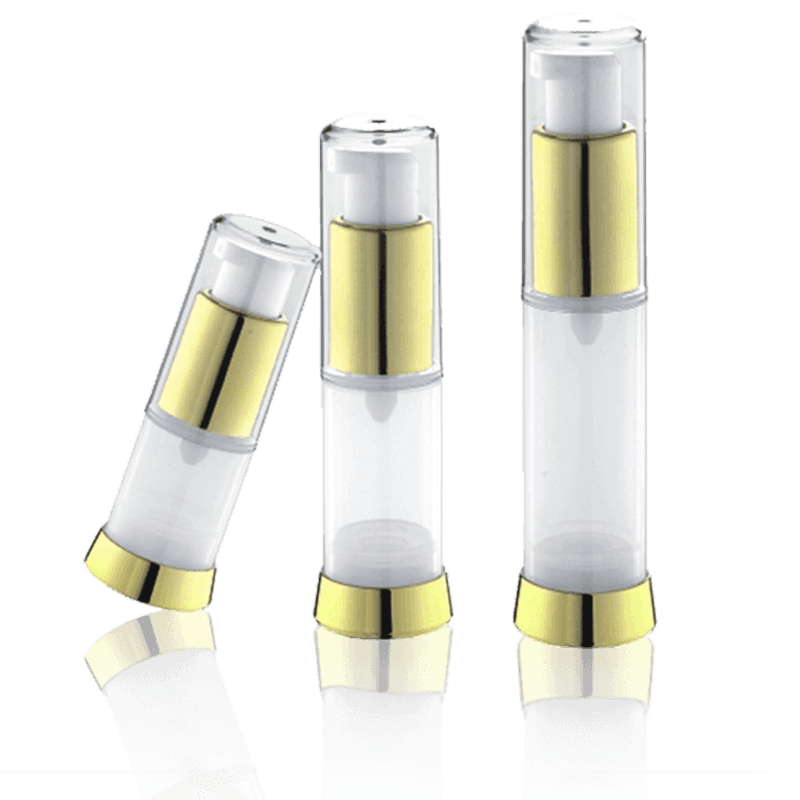
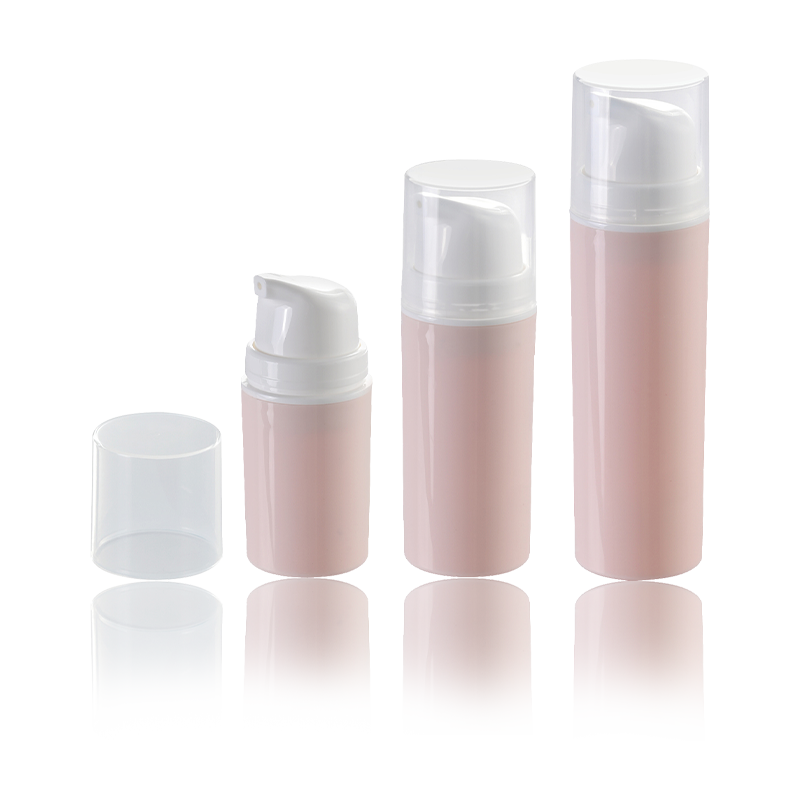
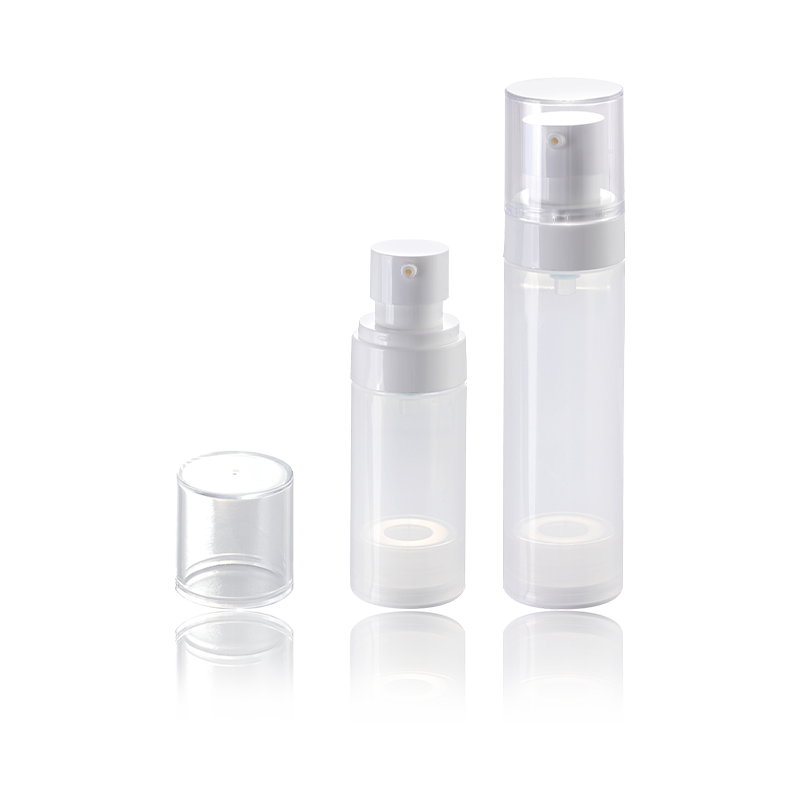
The airtight seal reduces oxygen exposure by most of the contact a traditional pump would allow. In realistic shelf-life tests, airless containers can extend product stability by roughly 30% compared to open-dip-tube packaging. That is significant for vitamin C, retinol, peptides, and tinted formulas that are prone to color change. For many formulators, the airless bottle has become a packaging standard for active-based serums. Brands testing their first airless packaging often start with a PP bottle such as our HS001A PP airless bottle, because it handles common lotion and cream formulas without over-engineering the package.
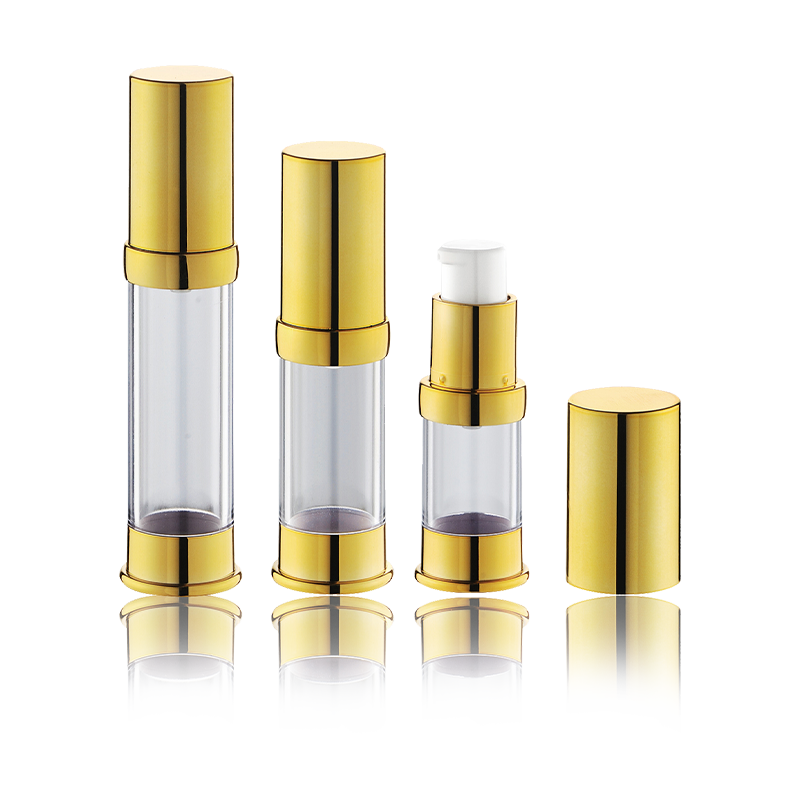 wholesale 5ML 10ML 15ML Precise quantity control Airless Bottle-HS-001A SupplierYuyao Hongsheng Commodity Co., Ltd is China OEM 5ML 10ML 15ML Precise quantity control Airless Bottle-HS-001A suppliers and 5ML 10ML 15ML...View Product →
Full Evacuation and Precise Dosing
Consumers do not like paying for product they cannot reach. In a traditional pump bottle, 5-10% of the formula can remain at the bottom when the dip tube is no longer submerged. An airless bottle consistently delivers 98-99% of the content, thanks to the piston and the sealed design. The dose per stroke is also more consistent, which matters for products like foundation or eye serum where a variable amount can break the user experience.
Lower Preservative Load and Cleaner Labels
Because the product does not touch air during use, formulators can reduce the amount of preservative or antioxidant needed. For brands that position themselves as clean beauty or minimal-ingredient products, this is an easier way to reach the label claims you want. If you want to see the broader industry picture, our market outlook article on cosmetic plastic packaging development explains why this trend is not a short-term fad.
Airless Bottle vs. Traditional Pump Bottle: A Side-by-Side Comparison
For most formulas thicker than a light toner, an airless bottle outperforms a conventional pump on product integrity, waste, and dosing accuracy. The trade-off is unit cost. The table below summarizes the main differences for a sourcing decision.
| Comparison | Airless pump bottle | Traditional pump bottle |
|---|---|---|
| Air exposure during use | None | Air re-enters as product is dispensed |
| Residual product | 1-2% | 5-10% |
| Dosing consistency | Stable from first to last stroke | Can vary as fill level drops |
| Formula suitability | Lotions, creams, serums, stick-like products | Thin liquids, cleansers, toners |
| Preservative requirement | Can be reduced | Standard level usually required |
| Unit cost | Higher | Lower |
| Typical makeup applications | Foundation, cream blush, eye cream | Toner, body lotion, micellar water |
Types of Airless Bottles for Makeup
You can classify airless bottles by material, capacity, pump mechanism, and finish. Each choice changes how the package looks, how it behaves on a filling line, and how consumers interact with it.
By Material
PP is the most economical option, fully color-moldable, and suitable for most water-based emulsions. PETG and acrylic delivers glass-like transparency and pairs well with tinted formulas, but costs more and is less impact-resistant than PP. Glass airless bottles are available for very small premium runs, while PCR or post-consumer recycled plastics are increasingly requested by brands with sustainability targets.
By Capacity
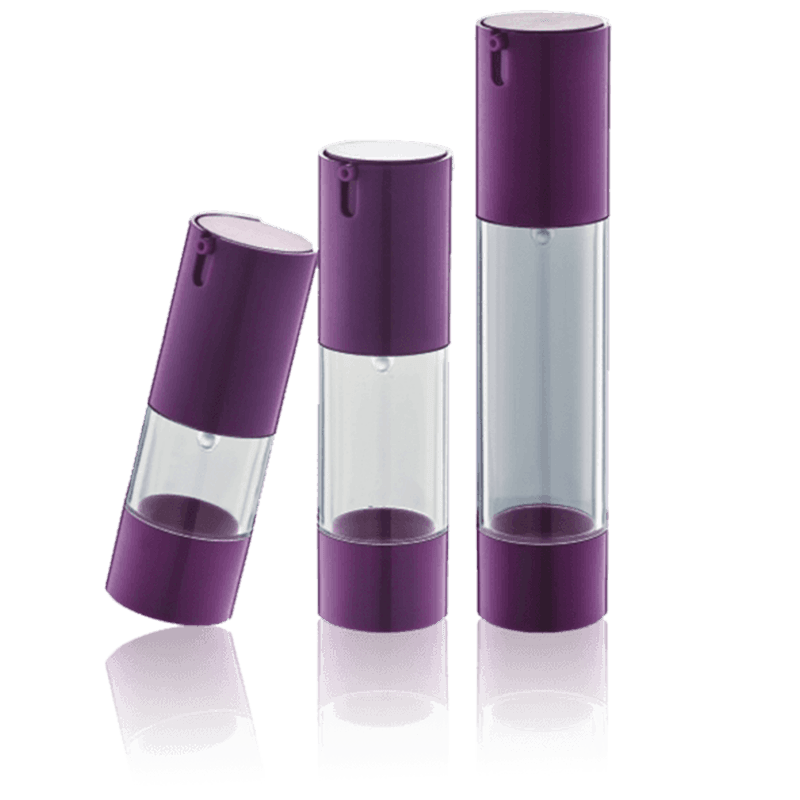
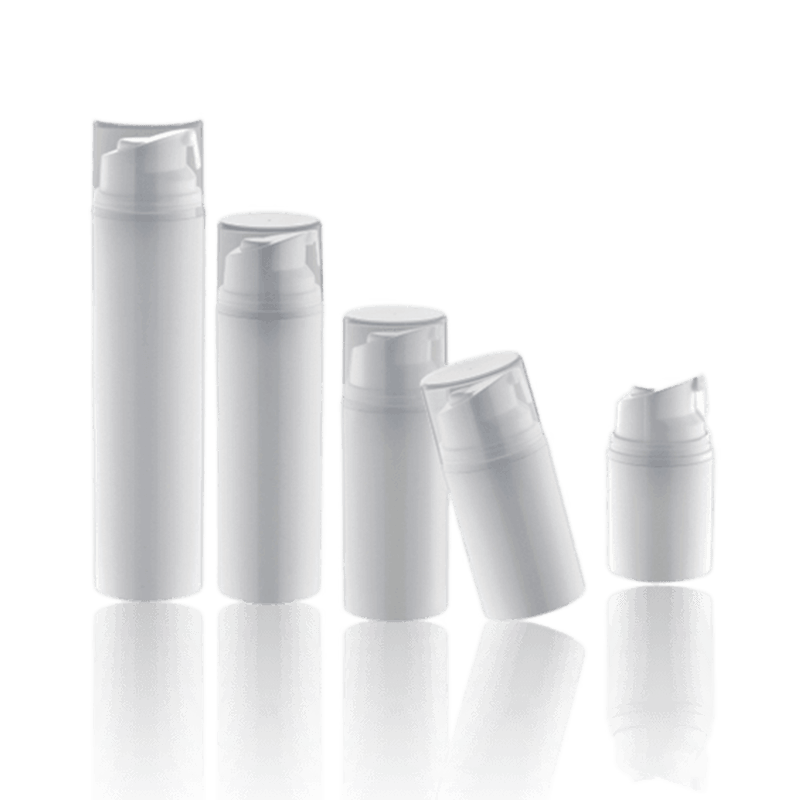
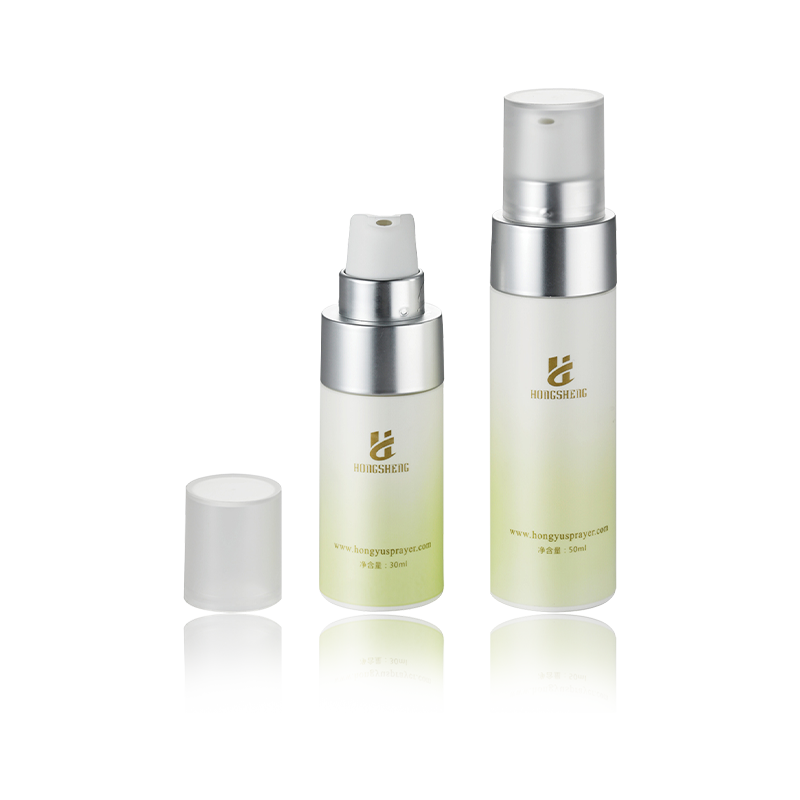
Common sizes in makeup are 15ml for serums and precision products, 30ml for foundations and BB creams, and 50ml for day and night creams. In a makeup line, the 30ml size is often the hero SKU: it is compact enough for a purse and still gives the consumer at least two months of use. For example, the HS017C airless bottle, offered in 30ml and 50ml configurations, is a frequent choice for foundation and moisturizer briefs.
 wholesale 50ML-120ML Purple gradient Airless Cosmetic Bottle-HS-017C Suppliers, Yuyao Hongsheng Commodity Co., Ltd is China OEM 50ML-120ML Purple gradient Airless Cosmetic Bottle-HS-017C suppliers and 50ML-120ML Purpl...View Product →
By Pump Mechanism
The pump head has to match the viscosity of your formula. A fine-dose pump with a long stroke is ideal for thin serums; a standard lotion pump fits lotions with mid-viscosity; a wide-mouth cream pump works for thick creams that cannot travel up a narrow dip tube.
By Surface Finish and Color
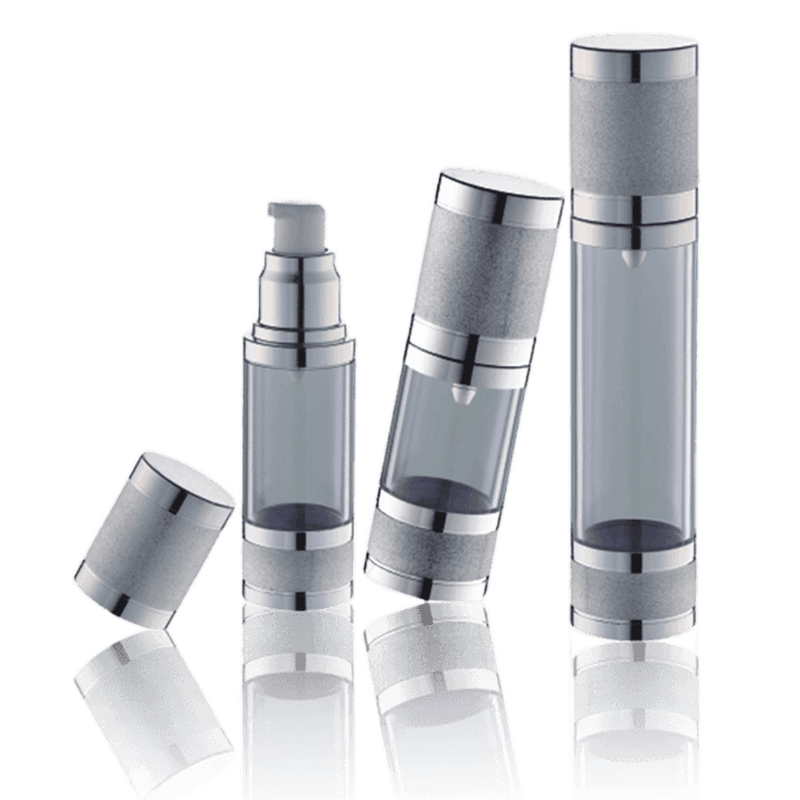
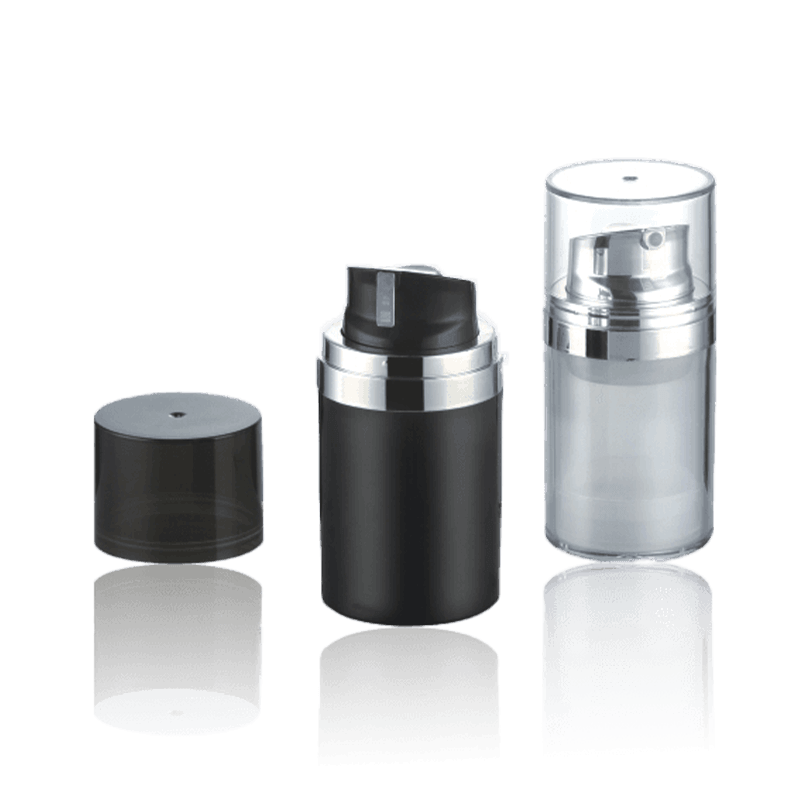
The outside shell can be molded in translucent, frosted, or soft-touch finishes, and decorated with silk-screen printing, hot-stamping, or electroplating. Matte finishes reduce the visible fingerprint issue on dark colors, while glossy transparent finishes show the color of the formula clearly.
How to Choose the Right Airless Bottle for Your Formula
Choosing the right airless bottle comes down to four practical steps: identify the viscosity, set the fill volume, verify chemical compatibility, and align the finish with the brand's visual identity.
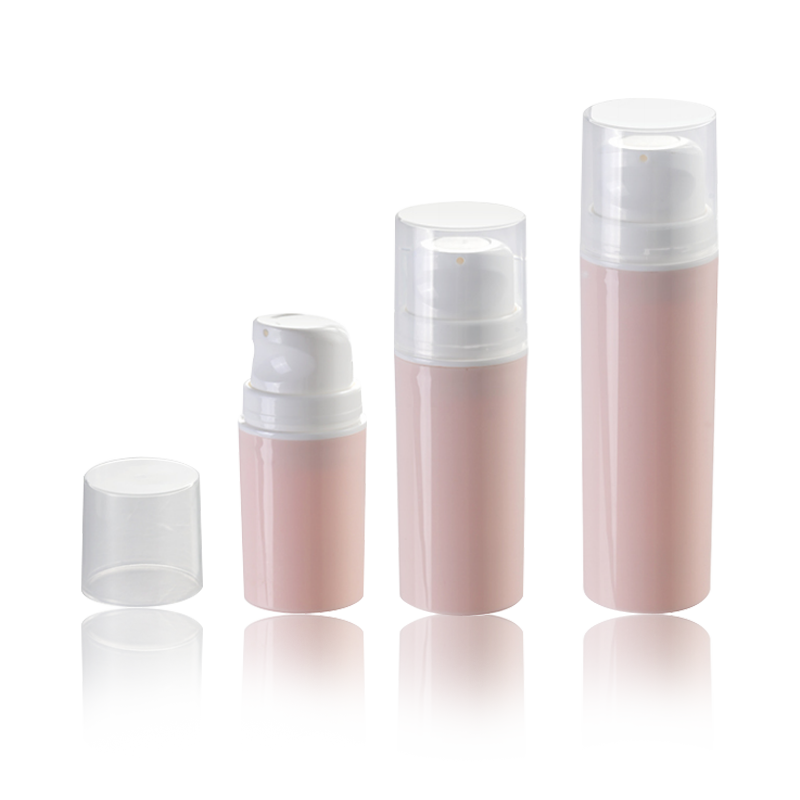
- Match the pump type to viscosity. If your product is a rich night cream, a standard lotion pump may clog or under-dispense; a wide-mouth cream pump is safer. The HS021A wide-mouth airless bottle
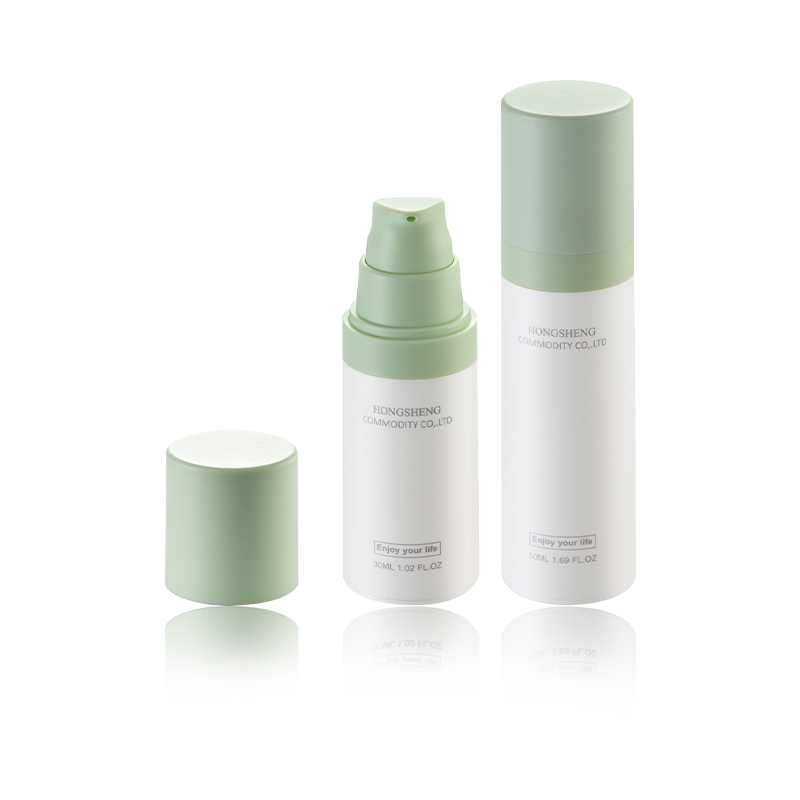 wholesale 30ML 50ML Airless Bottle Liquid Toiletry Container HS-021A Suppliers, Yuyao Hongsheng Commodity Co., Ltd is China OEM 30ML 50ML Airless Bottle Liquid Toiletry Container HS-021A suppliers and 30ML 50ML Airles...View Product → is a practical option in this category, as it accepts a larger pump head designed for high-viscosity formulas.
 - Select the capacity based on usage time. A 15ml airless bottle fits a two-week concentrated serum trial; a 30ml bottle is better for daily facial products; a 50ml version suits moisturizers and sun-care items that consumers apply generously.
- Verify chemical compatibility. Formula solvents and fragrance oils can swell or mar certain plastics. Always send your real formula to the packaging supplier for accelerated compatibility testing, especially if the formula is paraben-free, alcohol-based, or contains high levels of essential oils.
- Align the finish and color with brand positioning. The airless bottle is not just functional; it signals premium quality to the consumer. Frosted PP in a subtle tint works for minimal brands, while glossy PETG with a colored formula works better for visible product effects.
What to Check Before You Source Airless Bottles in Bulk
Packaging that fails on a filling line or in transit can erase any cost advantage. To avoid this, work through a short checklist before you commit to mass production.
- Test with your actual formula. The interaction between your preservative system, colorants, and the plastic can only be verified with the real product.
- Request a leak and pressure test. Make sure the supplier can provide data at low and high temperatures, not just at room temperature.
- Confirm the gasket material. Silicone gaskets are more stable than EPDM in many cosmetic formulas over long periods.
- Define the MOQ for each customized element. Bottle body, pump, printing, and plating may each have a different minimum order quantity.
- Check the filling line requirement. Airless bottles may require a dedicated bottom-filling or piston-insertion step, so confirm that your contracted manufacturer can handle it.
For a complete list of bottle bodies, pump systems, and caps that can be combined into one airless package, you can browse our full product catalogue and select the components that match your specification.
Frequently Asked Questions About Airless Bottles for Makeup
Can an airless bottle handle low-viscosity liquids like toner?
Yes, but only with the right pump head. A lotion pump with a low discharge volume can dose thin formulations, but extremely watery formulas may be more economically packaged in a conventional pump bottle. Discuss the viscosity range with your supplier before deciding.
Do airless bottles require special filling equipment?
Airless bottles often require a different filling process than standard pump bottles. The body is typically bottom-filled before the piston is inserted, or the piston already sits in the body and the product is injected through a needle. Be sure your manufacturing partner has this line capability.
What is a typical MOQ for custom airless bottles?
Custom color injection with printing and electroplating usually starts at 10,000 to 30,000 pieces, depending on the complexity. Smaller quantities are possible for stock bottles with standard finishes. Always clarify MOQ for each component separately.
How do I prevent pump leakage during shipping?
Use transport-locking clips on the actuator and verify gasket compatibility with your formula. A vacuum-leak test at varied temperatures can catch most leakage problems before your shipment leaves the factory.
Are glass airless bottles better for luxury makeup?
Glass airless bottles offer a heavier, premium hand feel and are highly recyclable, but they increase weight and breakage risk. PETG and acrylic achieve a similar transparent look with lower weight. For small, high-value serums, glass is worth the cost; for larger daily-use sizes, plastic airless designs are usually more practical.
An airless bottle has become a practical baseline for makeup and skincare packaging, not just a premium extra. It protects sensitive formulas, reduces preservative demand, and raises the consumer's perceived value of the product. The key to a successful project is to validate the pump mechanism, material compatibility, and filling process with your actual formula, and to work with a supplier who can show test data, offer customization options, and support you from sample to bulk production.